Quick answer: "Bright Data alternative" means two different things depending on who's searching. Developers and technical teams typically want another web scraping or proxy infrastructure platform with similar capabilities, such as Oxylabs, Decodo, ScraperAPI, or Apify. Sales teams, agencies, and founders often want the same end result Bright Data promises (usable business data) without managing scraping infrastructure themselves.
For that second group, Leads-Sniper (no-code, best for Google Maps and directory-based lead gen) and Apollo.io (best for outbound sales databases) are the stronger fit. This guide covers both categories so you can find the right match regardless of which problem you're actually trying to solve.
If you searched for a "Bright Data alternative," what you actually need depends on why you're searching. Developers and technical teams typically want another scraping or proxy platform with comparable infrastructure capabilities. Sales teams, agencies, and founders often want the end result: usable business contacts, without building or managing a scraping stack to get there.
Bright Data is a data collection giant with over 1,500 ready-made scrapers and a proxy network spanning 195 countries, but its output is raw HTML or JSON, not a spreadsheet of prospects ready for outreach. For teams whose goal is verified, sales-ready leads rather than data infrastructure, that gap is the core problem this guide addresses.
This guide organizes Bright Data alternatives into two distinct groups. The first covers tools purpose-built for lead generation: Leads-Sniper, Apollo.io, Clay, PhantomBuster, Apify, Octoparse, and TexAu. The second covers scraping and data infrastructure tools: Oxylabs, Decodo, ScraperAPI, Zyte, and Firecrawl, for teams that genuinely need proxy access or a programmable scraping stack rather than a finished contact list.
Quick Answer: Best Bright Data Alternatives by Category
Confirm current pricing and feature sets directly with each provider, as plans change frequently.
Bright Data vs. Leads-Sniper: How Do They Actually Compare?
Most "Bright Data alternative" articles skip this comparison entirely, since the two tools aren't built for the same job. That said, Bright Data is a genuinely strong platform for teams that need large-scale web data infrastructure, proxy access, programmable scraping across a wide range of sites, or broad enterprise-grade coverage.
If those are your requirements, it may simply be the right tool. But for teams evaluating both because they want usable business contacts rather than raw data infrastructure, the contrast below is the clearest way to decide.
Bright Data is well suited to engineering teams pulling raw data at scale across a wide range of applications. Leads-Sniper is built specifically for the moment a sales rep needs a list of verified prospects and a reason to pick up the phone. For a deeper breakdown, see our full Bright Data vs. Leads-Sniper comparison.
Suggested visual: side-by-side screenshot of the Bright Data dashboard and the Leads-Sniper search interface, illustrating the difference between raw scraper configuration and a filtered lead export.
Try Leads-Sniper free | Book a demo
What Counts as a Bright Data Alternative?
A "Bright Data alternative" can mean two different things depending on who's searching. For some, it means another web scraping or proxy infrastructure platform with comparable capabilities.
For others, it means a tool that delivers the end result they actually want: usable business data and prospect lists, without the overhead of building and managing scraping infrastructure. This guide covers both interpretations.
Most search results for "Bright Data alternatives" currently focus on web scraping platforms, proxy networks, and data infrastructure tools such as Oxylabs, Zyte, ScraperAPI, and Firecrawl. That's the dominant search intent Google associates with this keyword, and it's a valid one.
But it doesn't capture everyone searching the term. Developers want another scraping stack. Sales teams want usable leads. Because those are fundamentally different problems, this guide separates the two: technical alternatives for teams that need infrastructure, and lead-generation alternatives for teams that need prospect lists.
Sales teams, marketers, and agency owners often search for alternatives for a more fundamental reason: Bright Data is primarily designed around data collection infrastructure rather than an end-to-end sales prospecting workflow. Teams looking to use it for outreach typically need to add additional processing, enrichment, and CRM steps to turn scraped data into an outreach-ready list. A rep can log in and extract data, but getting from raw output to a usable contact list generally requires meaningful technical work along the way.
When Bright Data Works, and When It Doesn't for Lead Generation
Bright Data is a strong platform for what it's designed to do, but lead generation surfaces several structural gaps.
Raw, unprocessed output. Bright Data returns HTML or JSON, not a formatted contact list. Business names, phone numbers, and websites are buried in code that needs parsing before anyone can use them.
Technical setup required. Getting a scraper running means configuring a proxy zone or selecting a template, then completing a KYC onboarding process before making a single request.
Data cleaning burden. Once you have raw data, someone still has to deduplicate entries, validate phone numbers, and normalize address formats. None of that is handled natively by Bright Data.
No direct outreach workflow. There's no filtering by rating, category, or company size built for sales use, and no one-click export into a CRM or outreach tool.
Steep learning curve for non-technical users. Bright Data is built for engineers. A sales rep without coding experience will struggle to get from signup to a usable list without help.
None of this makes Bright Data a bad product. It makes it the wrong tool for a sales team whose real goal is a phone number, not a proxy.
What Sales Teams Actually Need from a Lead Generation Tool
The checklist for a sales rep looks nothing like the checklist for a developer evaluating proxy infrastructure.
- Structured output: business name, phone, email, website, address, category, and rating, ready to use immediately.
- Location and category filtering: search "HVAC contractors in Denver" and get exactly that, not a raw dump of every business result.
- Contact data quality: validated phone numbers and emails, not scraped-as-is data with no verification.
- A no-code interface: if it requires configuring a proxy zone, the sales rep has already given up.
- CRM-ready export: CSV, Excel, or a direct integration so the list moves straight into the outreach workflow.
- Speed: minutes from search to usable list, not hours of engineering time.
Almost none of the general-purpose scraping tools check all six boxes. That gap is exactly why purpose-built lead generation platforms exist as a distinct category.
Real Workflow Example: From Google Maps to a Sales Call
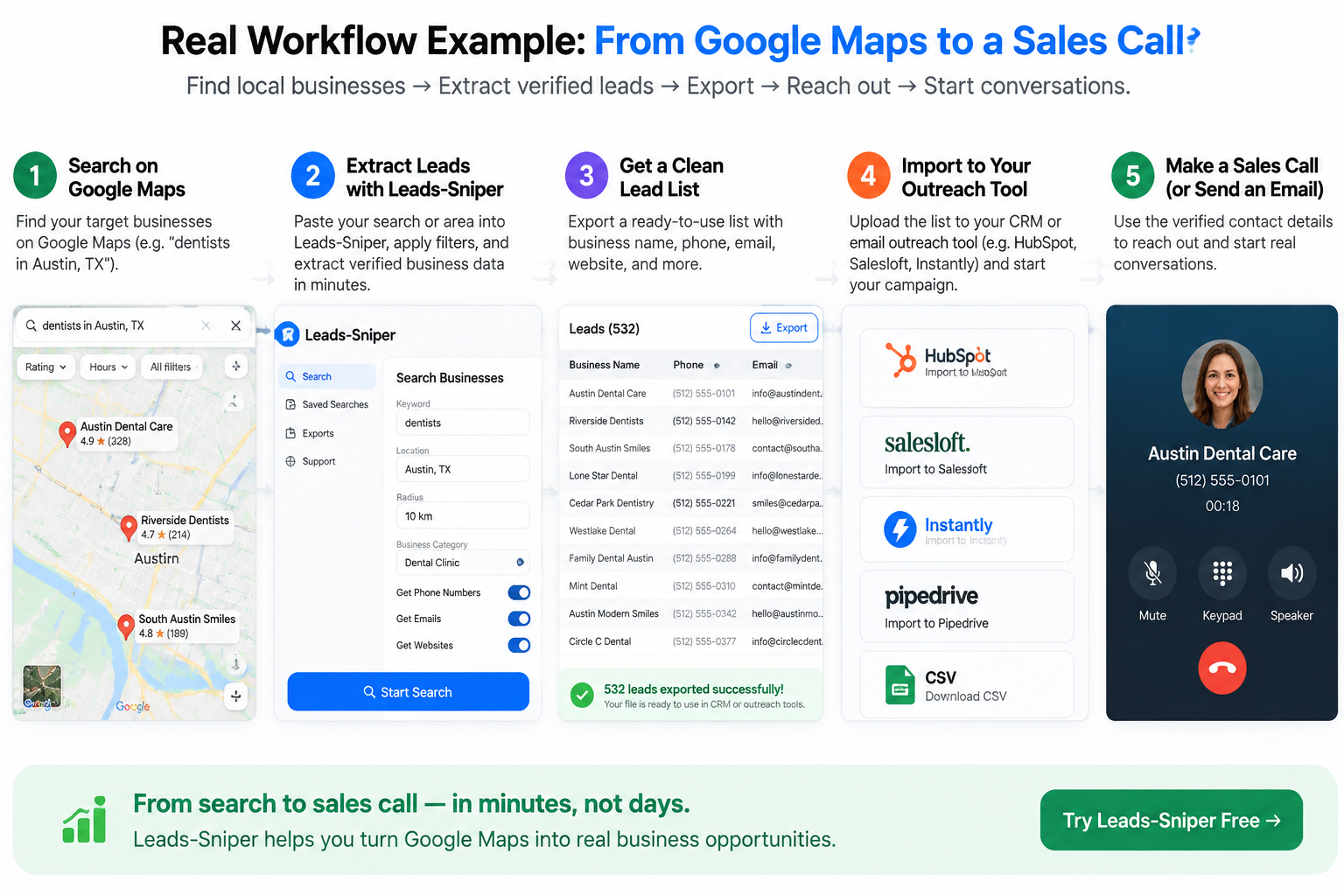
To test how each tool performs under real conditions, we ran the same scenario across Bright Data, Apify, and Leads-Sniper: find 200 roofing companies in the Dallas metro area, with phone numbers and websites, ready to hand to a sales rep. We measured setup time, steps to export, and how much manual cleanup the output required before it was usable.
Using Bright Data: We started by completing the KYC onboarding process, which added time before we could make a single request. Once approved, we configured a proxy zone, selected a Google Maps scraper template, and ran it against Dallas search results.
The raw output came back as JSON: business names, phone numbers, and addresses were all present but unstructured, mixed in with irrelevant fields and duplicate entries. We then had to write a parser to extract the fields we needed, run a deduplication pass, validate the phone numbers against a separate tool, and manually reformat the data before it was ready to hand to a sales rep.
Total time from signup to a usable list: the better part of a full business day, and that assumed developer experience with scraping APIs.
Using Apify (Google Maps Actor): We opened Apify's Actor marketplace, found the Google Maps scraper, and had it running within about 20 minutes. No proxy configuration was needed, which was noticeably faster than Bright Data's setup.
The output came back as structured JSON with business names, addresses, phone numbers, and websites already separated into fields. That was a meaningful step up from raw HTML.
However, the data still needed a cleanup pass: duplicate listings appeared across overlapping search areas, some phone numbers were missing, and the column headers didn't map directly to our CRM without reformatting. Total time from signup to a list we'd hand to a sales rep: roughly two hours, assuming some comfort with exporting and editing spreadsheets.
Using Leads-Sniper: We signed up in under two minutes: no KYC, no proxy configuration, no waiting for approval. From the dashboard, we typed "roofing companies" into the search field, selected "Dallas, TX" as the location, and applied a minimum star rating filter to screen out low-quality listings.
The platform returned structured results with business names, phone numbers, websites, and addresses already separated into clean columns. We exported to CSV and had a spreadsheet ready to import directly into our CRM in less than 30 minutes from the moment we first opened the site.
No parser. No deduplication pass. No reformatting. The list was usable for outreach the same morning we ran the test.
Based on our testing, the differences were stark. Bright Data took the better part of a full business day before a sales rep could make a single call, and that assumed a developer was running the process. Apify cut that down to roughly two hours, but still required manual deduplication and reformatting.
Leads-Sniper had a usable, CRM-ready list in under 30 minutes with no cleanup at all. The tools that require more engineering investment can technically extract more data types. But when the goal is a repeatable, non-technical prospecting workflow, the time-to-outreach gap between infrastructure tools and purpose-built lead generation platforms isn't marginal. It's measured in hours.
Suggested visual: annotated screenshot showing a Google Maps search transformed into a downloadable lead export.
Group A: Best Bright Data Alternatives for Lead Generation
1. Leads-Sniper: Best for Sales Teams and Agencies
Leads-Sniper is a no-code lead generation platform, not a scraping API. It extracts business data from Google Maps, Google Search, Yellow Pages, and business domains, delivering structured, sales-ready prospect lists with no proxy setup, no parsing, and no manual cleanup.
Best for: Sales teams, B2B agencies, recruiters, and local service businesses that need a prospect list, not raw scraped data.
Advantages: No engineering required, structured output straight out of the box, coverage across four data sources in one platform, and a fast path from search to sales call.
Limitation: It's not a general-purpose scraping tool and won't extract arbitrary websites or serve as a proxy network.
Get started for free | Book a demo
2. Apollo.io: Best for Outbound Sales Databases
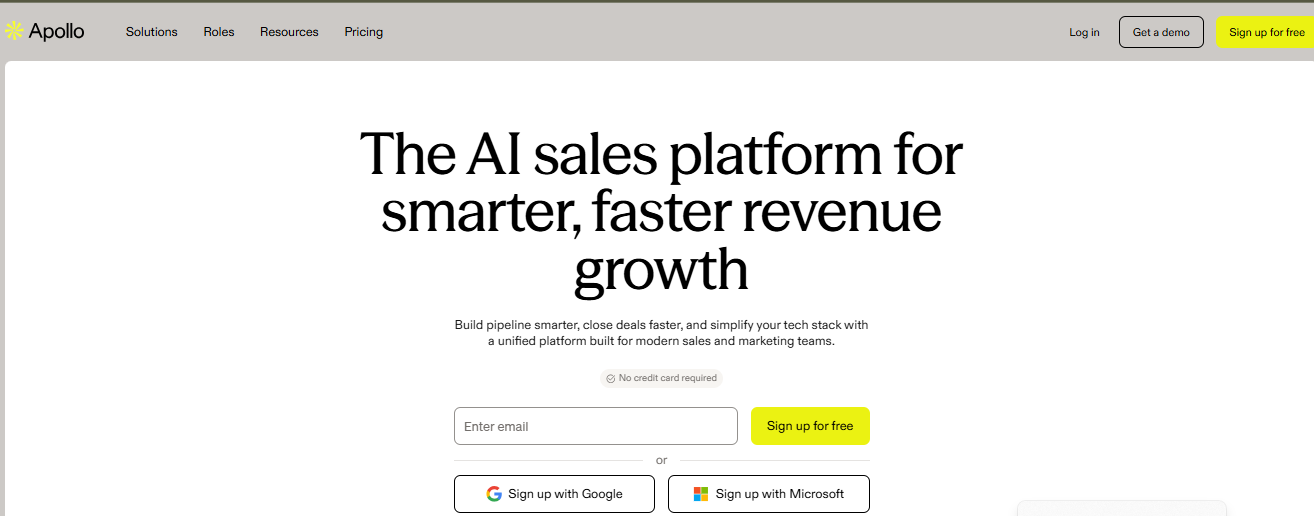
Apollo.io combines a large B2B contact database with outbound automation, deliverability tools, and CRM integrations, serving over 600,000 companies. Its database includes more than 240 million contacts and 30 million companies, with advanced filtering by title, seniority, company size, and buyer intent signals.
Best for: Sales teams that want a database plus outreach sequencing in a single platform, rather than a data-extraction tool.
Advantages: Verified emails and phone numbers, built-in email sequencing, and native CRM syncing with platforms like Salesforce and HubSpot.
Limitation: Apollo's database model works differently from a scraper. It's built around existing contact records rather than live extraction from sources like Google Maps or local directories.
3. Clay: Best for Multi-Source Data Enrichment
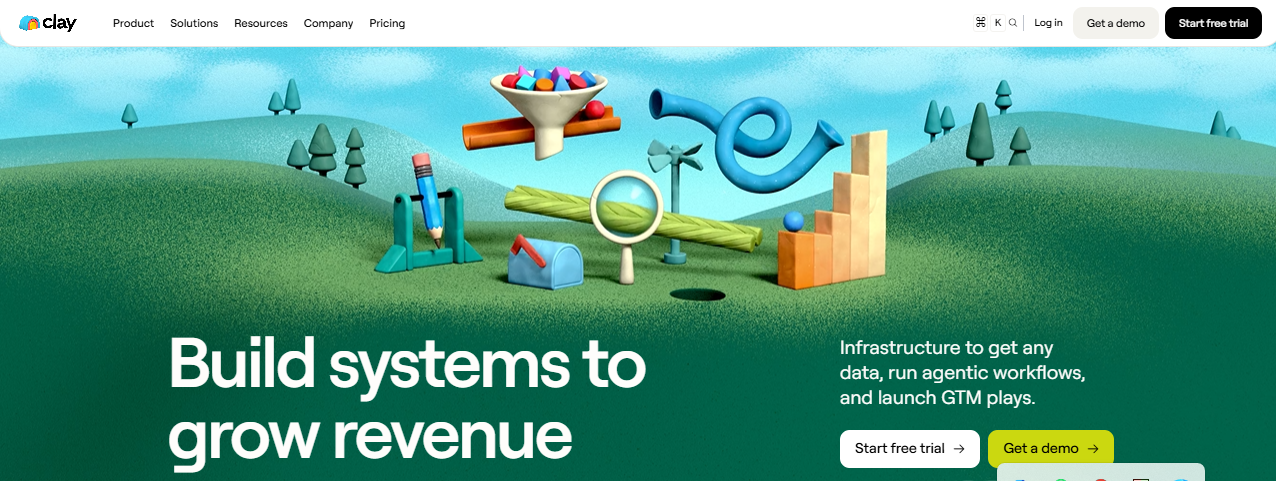
Clay pulls data from dozens of sources and enriches lead lists with waterfall logic, combining multiple data providers into a single workflow. It's powerful for teams that want to layer enrichment on top of existing lead sources.
Best for: Growth and ops teams building custom enrichment pipelines across multiple data providers.
Limitation: Clay has a steeper setup curve than a purpose-built lead generation tool and works best when paired with an existing source of leads.
4. PhantomBuster: Best for LinkedIn and Social Prospecting
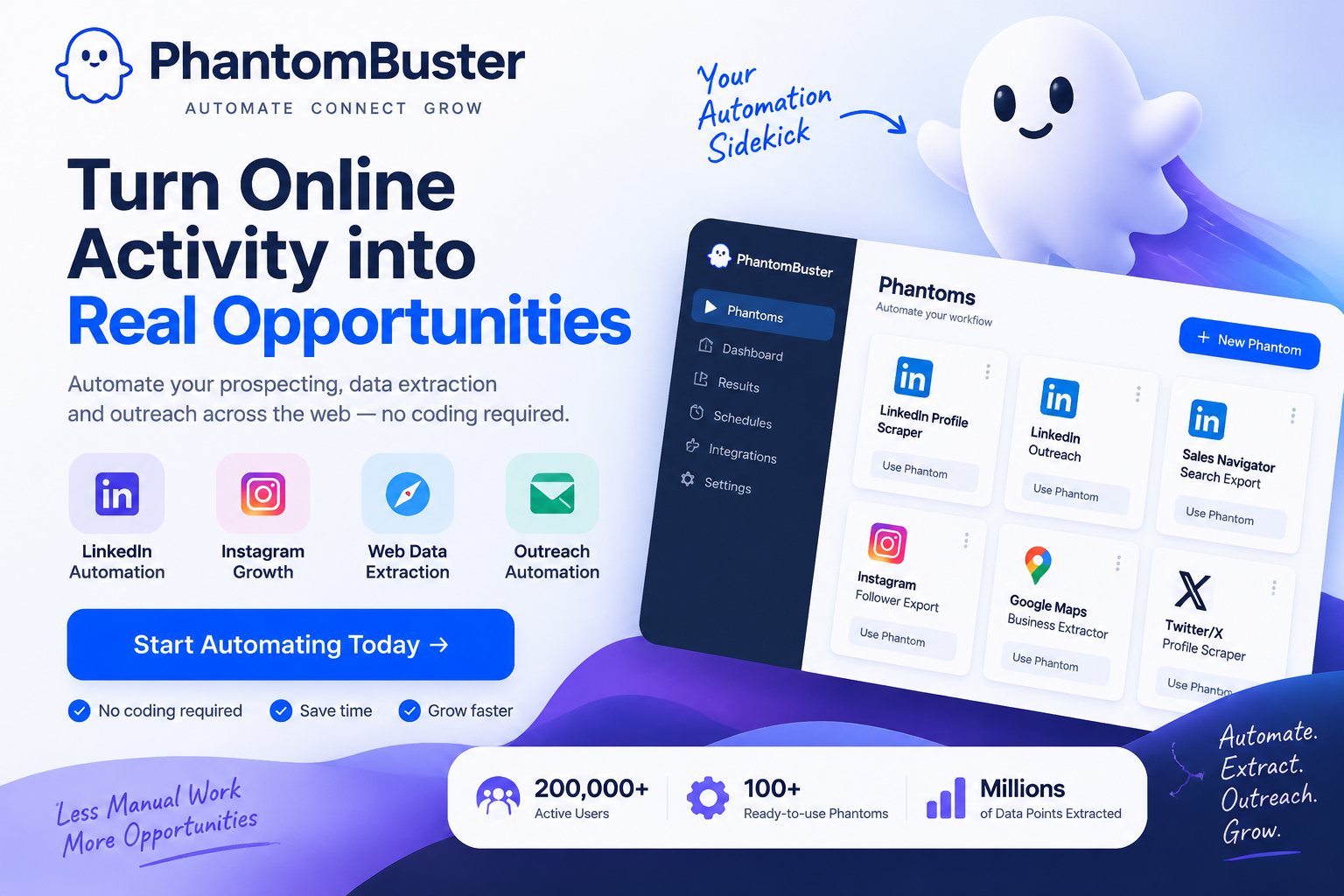
PhantomBuster automates data extraction and outreach across LinkedIn, Twitter/X, and other social platforms using pre-built "Phantoms" for specific tasks like profile scraping or connection automation.
Best for: Teams whose prospecting relies heavily on LinkedIn and social platforms rather than local business directories.
Limitation: Coverage is platform-specific, so it doesn't address Google Maps or directory-based lead generation. For a broader look at how it stacks up, see our guide to PhantomBuster alternatives.
5. Apify: Best for Custom Scraping Workflows
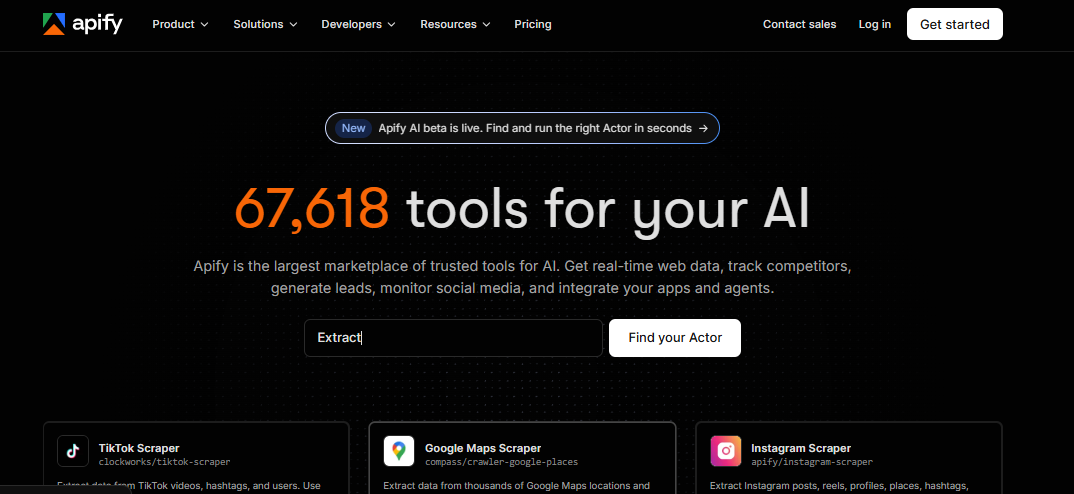
Apify is a full scraping and automation platform built around "Actors": pre-built, customizable scrapers for specific sites, including a Google Maps Actor. With more than 35,000 ready-made Actors, it's the most developer-friendly option on this list for teams that want programmable control.
Best for: Development teams building custom data pipelines who want a programmable platform rather than a black-box tool.
Limitation: Non-technical users face a real learning curve, and output still needs cleaning before it's sales-ready.
6. Octoparse: Best for Visual, No-Code Web Scraping
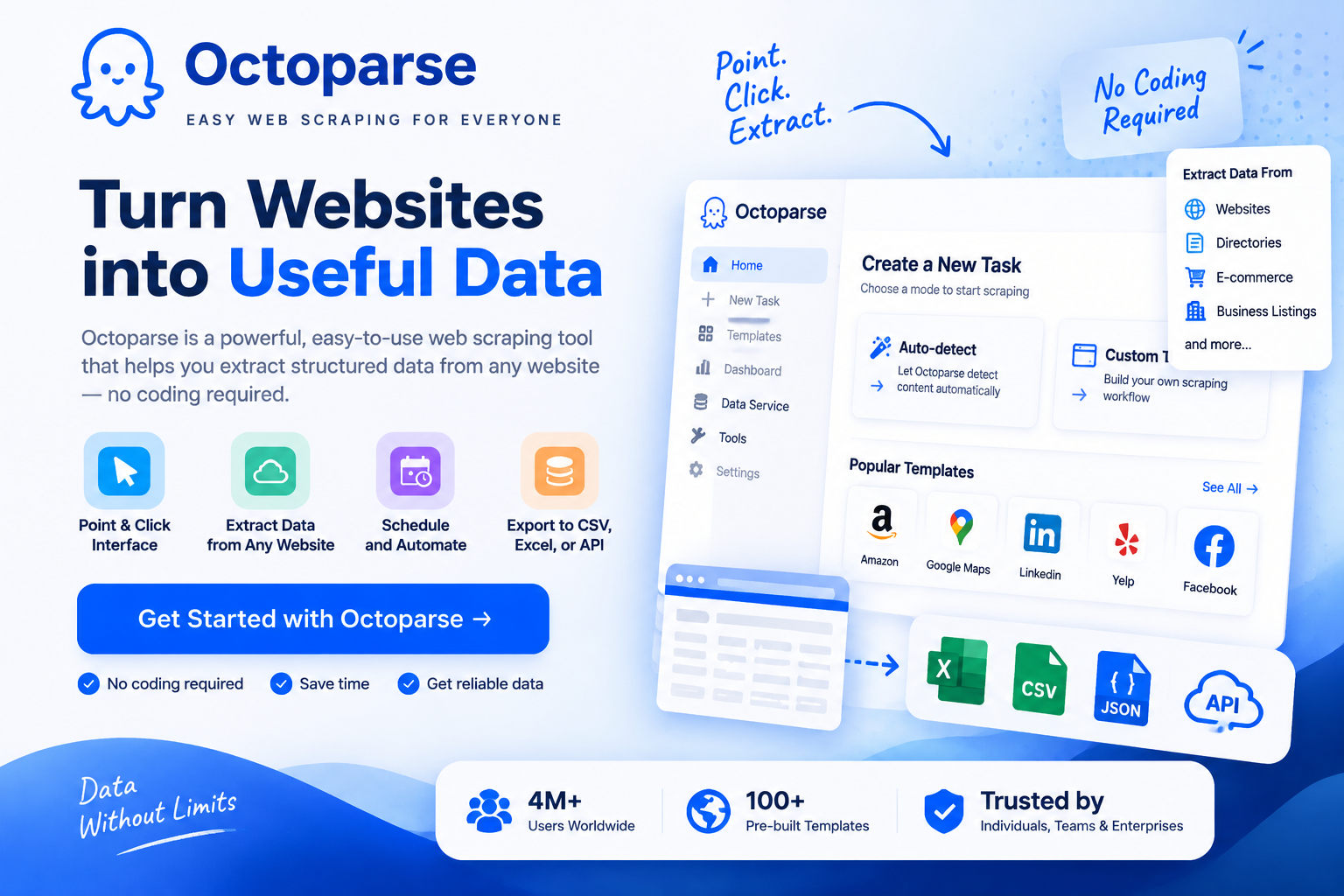
Octoparse offers a point-and-click interface for scraping structured data from websites, aimed at users without coding experience. It's a general-purpose tool rather than one built specifically for sales prospecting.
Best for: Non-technical users who need flexible, general-purpose data extraction beyond just business listings.
Limitation: Lacks the built-in filtering, verification, and CRM-ready formatting that a dedicated lead generation platform provides natively.
7. TexAu: Best for Multi-Platform Automation
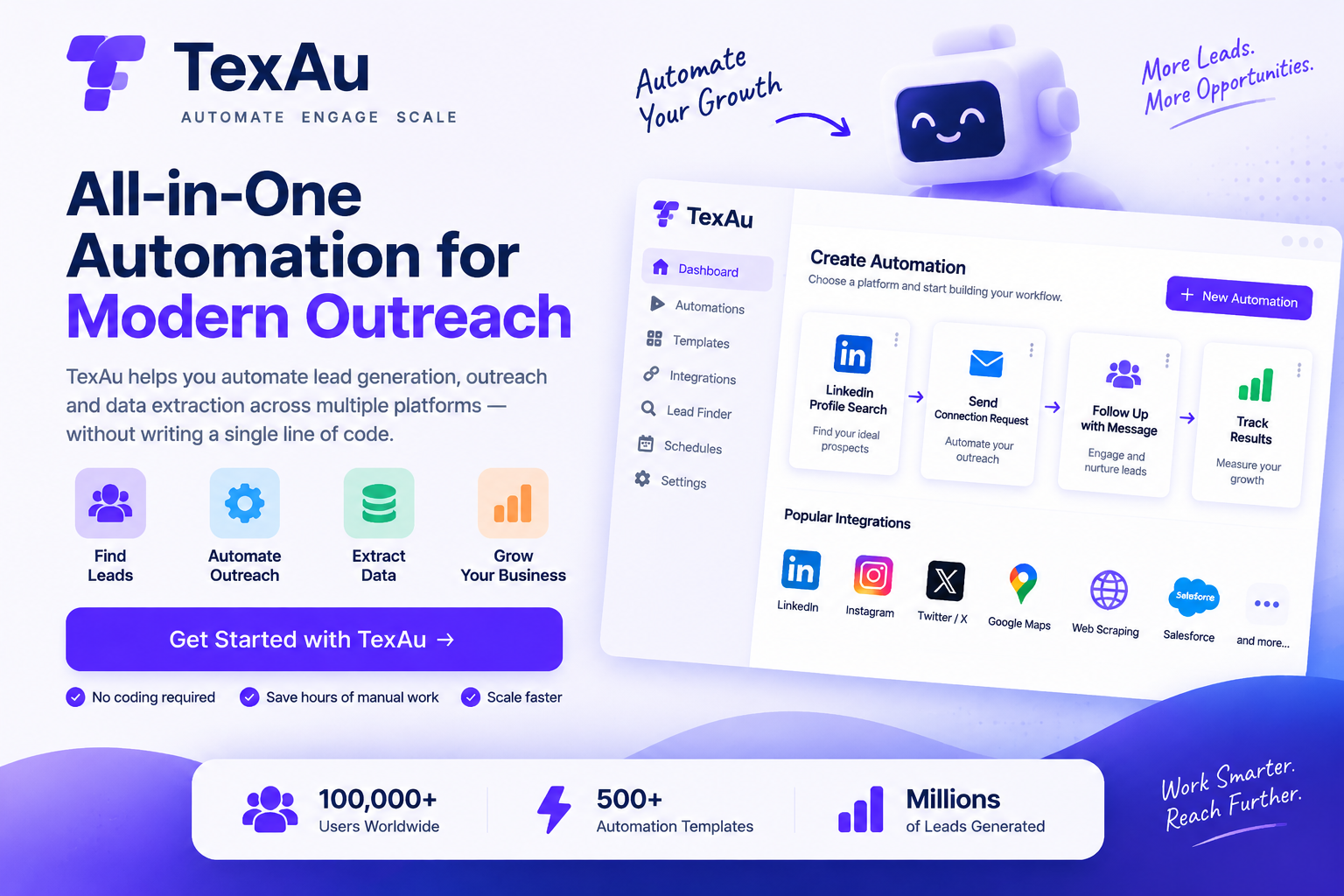
TexAu automates data extraction and outreach sequences across multiple platforms, chaining together different actions into broader workflows. It sits between a scraping tool and an automation platform.
Best for: Teams comfortable building multi-step automations across several data sources and outreach channels.
Limitation: The breadth of the platform means more configuration is required to reach a lead-generation-ready outcome compared to a purpose-built tool.
Best Bright Data Alternatives by Use Case
Bright Data Alternative for Sales Teams
Leads-Sniper is the strongest fit. It's built around the search-filter-export workflow sales reps actually use, with no engineering required.
Bright Data Alternative for Agencies
Agencies managing prospecting for multiple clients benefit from Leads-Sniper's speed and Apollo.io's built-in outreach sequencing, depending on whether the priority is fresh local leads or a broader contact database.
Bright Data Alternative Without Coding
Leads-Sniper, Apollo.io, and Octoparse all offer no-code interfaces. Of the three, Leads-Sniper is the only one purpose-built specifically for structured, sales-ready lead lists rather than general data extraction.
Bright Data Alternative for Google Maps Lead Generation
Leads-Sniper provides native Google Maps extraction with no setup. For teams that want more granular control, Apify's Google Maps Actor is a viable option for technical users. Learn more in our Google Maps scraper guide.
Bright Data Alternative for Proxy Infrastructure
For teams that genuinely need proxy access rather than lead lists, Oxylabs and Decodo (formerly Smartproxy) are the strongest picks. Oxylabs offers SERP scraping from $1.00 per 1,000 requests with strong benchmark performance, while Decodo starts at $0.50 per 1,000 requests with instant self-service onboarding. Neither includes a native lead generation layer, so output still requires processing before it's outreach-ready.
Group B: Best Bright Data Alternatives for Scraping and Data Infrastructure
Not every team searching for a Bright Data alternative wants a lead list. Some need raw data at scale, programmable scraping, or reliable proxy access. The tools below are the closest functional alternatives to Bright Data for technical use cases, along with a pricing snapshot to help you compare cost alongside fit.
8. Oxylabs: Best for Enterprise SERP and Proxy Infrastructure
Oxylabs is the closest enterprise-grade competitor to Bright Data on proxy scale and SERP scraping accuracy. According to third-party benchmarks (Proxyway, 2026), it achieves approximately 99.95% proxy success rate and a 0.6s average response time, edging out Bright Data on speed. SERP scraping starts at $1.00 per 1,000 requests, which is more accessible than Bright Data's entry pricing for teams focused on search data.
Best for: Dev teams running high-volume SERP monitoring, price tracking, or data collection pipelines who need raw data reliably and at scale.
Limitation: No built-in lead generation workflow. Output requires additional parsing and formatting before it's ready for sales use.
9. Decodo (formerly Smartproxy): Best Budget Proxy Option
Decodo offers competitive proxy performance at significantly lower cost, starting at $0.50 per 1,000 requests on standard proxies, with a free tier and instant self-service onboarding. It won Proxyway's 2026 Best Value Provider award and benchmarks at approximately 99.92% success rate and 0.63s response time.
Best for: Budget-conscious developers and startups who need proxy infrastructure without Bright Data's price tag or KYC onboarding delay.
Limitation: No native lead generation or contact enrichment layer.
10. ScraperAPI: Best Plug-and-Play Scraping API
ScraperAPI simplifies scraping into a single API endpoint. Send a URL, get back the page content. It handles proxy rotation, browser rendering, and CAPTCHA solving behind the scenes. Plans start at $49/month for 100,000 credits, with Google SERP scraping costing 25 credits per request.
Best for: Developers who want a simple, managed scraping API without building proxy infrastructure from scratch.
Limitation: Heavy SERP use depletes credit plans faster than expected. Output is raw page content that requires parsing before it's usable for prospecting.
11. Zyte: Best for Compliance-Focused Web Scraping
Zyte (formerly Scrapy Cloud) is a managed scraping platform with a strong focus on compliance, anti-bot bypass, and scalable extraction. It's widely used by enterprise data teams and e-commerce businesses that need reliable, large-scale scraping with legal guardrails.
Best for: Enterprise teams with compliance requirements or legal sensitivity around data collection.
Limitation: Steeper learning curve than simpler scraping APIs, and not designed for sales prospecting workflows.
12. Firecrawl: Best for LLM-Ready Web Data
Firecrawl is a newer entrant built around converting web content into clean, structured markdown or JSON suitable for AI and LLM pipelines. It's gaining traction among developers building AI-powered applications that need reliable, clean web data as input.
Best for: Developers building AI applications or LLM pipelines that need clean, structured web content rather than raw HTML.
Limitation: Not a prospecting tool. It doesn't produce sales-ready contact lists and isn't designed for outreach workflows.
Bright Data Alternatives: Pricing Snapshot
Verify all current pricing directly with each provider before purchasing, as plans and rates change frequently.
Bright Data vs. Alternatives: Direct Comparisons
Bright Data vs. Apollo.io: Bright Data extracts data from the open web; Apollo.io provides a pre-built, verified contact database with outreach tools attached. For sales teams, Apollo.io skips the extraction step entirely.
Bright Data vs. Apify: Apify's Actor marketplace is larger in raw count, and its Google Maps Actor makes it more accessible to technical users focused on lead generation than Bright Data's general scraper library.
Bright Data vs. Oxylabs: Oxylabs offers competitive SERP pricing and strong benchmark performance, but like Bright Data, it delivers raw data that requires further processing before it's sales-ready.
Bright Data vs. Leads-Sniper: Bright Data is infrastructure for engineering teams. Leads-Sniper is a finished workflow for sales teams. The right choice depends entirely on whether your team needs raw data access or a ready-to-use prospect list.
How to Choose the Right Bright Data Alternative
Work through these questions before committing to a tool:
- Are you building a product or finding leads? Building a data pipeline calls for infrastructure (Bright Data, Oxylabs, Apify). Finding leads for outreach calls for a prospecting tool (Leads-Sniper, Apollo.io).
- How technical is your team? Developers can extract more value from raw infrastructure. Sales-first teams need a no-code interface.
- How fast do you need to start? Tools with KYC requirements add processing time before your first request. Self-service platforms let you start the same day.
- What should your output look like? If the end goal is a CRM-ready spreadsheet with names, numbers, and emails, choose a tool that produces that natively.
- Do you need proxies, a scraping API, or structured leads? Some tools are data-first (Oxylabs, Decodo). Some are outcome-first, built to produce prospect lists rather than raw data (Leads-Sniper).
If your answer to question one is "finding leads," most infrastructure tools on this list will demand more engineering work than your team has the capacity for.
Try Leads-Sniper free | Book a demo
Frequently Asked Questions
What is the best Bright Data alternative for lead generation?
For sales teams and agencies, Leads-Sniper is purpose-built for outreach-ready prospect lists from Google Maps, Google Search, and directories, with no engineering setup required.
Is Bright Data good for finding business leads?
Bright Data can scrape sources like Google Maps at scale, but it returns raw data that requires parsing, deduplication, and formatting before it's ready for sales outreach. Purpose-built tools like Leads-Sniper handle that last step natively.
What's the difference between Leads-Sniper and Apollo.io?
Leads-Sniper extracts fresh leads directly from live sources like Google Maps and Yellow Pages. Apollo.io provides access to an existing verified contact database of 240 million-plus contacts alongside outreach automation. Teams often use both depending on whether they need hyper-local leads or a broad national database.
Do any of these tools require coding knowledge?
Leads-Sniper, Apollo.io, and Octoparse are designed for non-technical users. Apify and TexAu offer more flexibility but require more comfort with configuration. Bright Data and Oxylabs are built primarily for developers.
Which alternative is best for agencies managing multiple clients?
Leads-Sniper's speed makes it practical for agencies running fresh local searches for each client, while Apollo.io suits agencies that need a persistent, searchable contact database across campaigns.
Are there free options among these tools?
Leads-Sniper, Apollo.io, Apify, and Decodo all offer free trials or free tiers, making it possible to test before committing to a paid plan.
Can I use Bright Data alongside a lead generation tool?
Yes. Some technical teams use Bright Data or Apify for large-scale infrastructure needs while using Leads-Sniper for day-to-day sales prospecting. The two solve different problems and aren't mutually exclusive.
Is there a cheaper alternative to Bright Data?
Yes. Decodo starts at $0.50 per 1,000 requests and offers instant self-service onboarding, making it the most budget-friendly option for proxy infrastructure. For lead generation specifically, Leads-Sniper offers a free trial with no credit card required.
What is the best Bright Data alternative for web scraping?
For general-purpose web scraping, Apify and ScraperAPI are the most accessible options. For enterprise-scale scraping with high proxy accuracy, Oxylabs is the closest functional alternative.
What is the best Bright Data alternative for developers?
Apify, Oxylabs, and Decodo are all strong choices depending on whether you need a programmable scraping platform, enterprise proxy infrastructure, or a budget-friendly API.
What is the best Bright Data alternative for Google Maps?
Leads-Sniper is the fastest option for non-technical users, offering native Google Maps extraction with no setup. Apify's Google Maps Actor is a solid choice for developers who want more control over the extraction workflow.
What is the best Bright Data alternative for B2B lead generation?
Leads-Sniper is purpose-built for B2B lead generation, extracting verified business contacts from Google Maps, Google Search, and directories. For teams that also need outreach automation, Apollo.io pairs well as a complementary tool.
Final Recommendation
- Sales teams, agencies, and founders: Leads-Sniper: purpose-built for prospecting, no engineering required.
- Teams wanting a database plus outreach automation: Apollo.io.
- Teams building custom enrichment pipelines: Clay.
- LinkedIn and social-first prospecting: PhantomBuster.
- Developers building custom scrapers: Apify.
- Non-technical users needing general web scraping: Octoparse.
- Multi-platform automation workflows: TexAu.
- Proxy infrastructure and SERP accuracy: Oxylabs or Decodo.
Stop Scraping. Start Calling.
Extracting data is only step one. Turning it into a verified lead list your team can actually work with is where the real return shows up. Leads-Sniper automates that entire path: from Google Maps, Google Search, Yellow Pages, and business domains straight to a sales-ready contact list, without a single line of code.
Get started for free: no credit card required, or book a demo to see it in action.
For a closer look at how Leads-Sniper stacks up against other prospecting tools, see our comparisons of Leads-Sniper vs. D7 Lead Finder and Leads-Sniper vs. Bright Data.
Suggested visual: comparison infographic summarizing the eight tools by technical requirement and lead-gen capability, for social sharing and quick reference.