



Getting traffic to your website is only half the job. If those visitors leave without taking action, your marketing will not create real revenue. That is where lead generation comes in.
So, what is lead generation in digital marketing? In simple terms, it is the process of attracting people who are interested in your product or service and turning them into identifiable prospects. This usually means collecting contact details like an email address, phone number, or company information so you can build a relationship over time.
For B2B marketers, small business owners, startups, and sales teams in the USA, this matters more than ever. Buying old contact lists and hoping for results no longer works. In 2026, businesses need a smarter system built on relevant content, strong targeting, automation, and fresh data.
In this guide, you will learn how lead generation works, the different types of leads, the best digital marketing channels for leads, and how to improve results across your sales funnel. You will also see which tools and strategies can help you generate better leads at a lower cost.
Why Lead Generation Matters in 2026
Buyer behavior has changed fast over the last few years. Most B2B buyers now do their own research long before they speak with a sales rep. They compare brands, read reviews, study pricing, and look for proof that a company can solve their problem.
That shift makes lead generation a core part of modern digital marketing.
When your system works well, you can:
- Attract people who already need what you offer
- Capture their information at the right time
- Segment them based on interest and buying stage
- Nurture them until they are ready to talk to sales
- Increase revenue without depending only on paid ads
Lead generation also helps control customer acquisition costs. Ad costs have continued to rise across Google, LinkedIn, and Meta. If you spend to get traffic but do not have a clear plan to convert that traffic, your return on investment drops fast.
A strong lead engine fixes that. It gives you a repeatable way to turn attention into pipeline, and pipeline into sales.
How Lead Generation Works: The Sales Funnel Step by Step

To understand what is lead generation in digital marketing, it helps to picture the process as a sales funnel. People enter at the top as strangers and move down as they become more qualified.
1. Attraction (Top of the Funnel)
At this stage, the person has a problem and starts looking for answers. They may find your business through:
- A blog post
- A Google search
- A LinkedIn post
- A YouTube video
- A paid ad
Your goal here is to bring in qualified traffic, not just more traffic.
For example, a Texas accounting software company might publish a blog post about tax reporting mistakes for small businesses. That content attracts business owners who may later need the company’s software.
2. Conversion (Middle of the Funnel)
Once the visitor lands on your site, you offer something valuable in exchange for their contact details. This might be:
- A free guide
- A webinar
- A product demo
- A pricing calculator
- A free consultation
They fill out a form, and now they become a lead.
This is the point where your website stops being just an information hub and starts becoming a lead generation system.
3. Lead Nurturing (Bottom of the Funnel)
Most leads are not ready to buy right away. That is normal.
Lead nurturing helps move them closer to a decision. You can do this with:
- Automated email sequences
- Case studies
- Product comparisons
- Testimonials
- Follow-up content based on behavior
For instance, if someone downloads a guide on improving warehouse efficiency, a logistics software company can follow up with a case study, then an ROI calculator, then an invite to book a demo.
4. Sales Handoff and Close
When a lead shows strong buying intent, marketing passes it to sales.
This is where the difference between marketing qualified leads (MQL) and sales qualified leads (SQL) becomes important. A strong handoff process helps sales teams focus on the right people instead of chasing cold contacts.
Types of Leads

Not every lead has the same value. Good businesses sort leads by intent, fit, and stage in the funnel.
Cold Leads
Cold leads have had little interaction with your brand. They may have visited your website once or seen one ad, but they are not close to buying.
These leads need education and trust-building before any sales push.
Warm Leads
Warm leads know your brand and have shown repeated interest. They may open your emails, visit your pricing page, or engage with your content on LinkedIn.
They are more likely to convert than cold leads but may still need nurturing.
Hot Leads
Hot leads are close to making a decision. They may request a demo, ask for a quote, or reply to a sales email.
These leads should get fast follow-up from your sales team.
Marketing Qualified Leads (MQL)
An MQL is a lead who has engaged with your marketing but is not yet ready for direct sales outreach.
Examples include someone who:
- Downloads an ebook
- Signs up for a webinar
- Visits key service pages several times
MQLs are valuable because they have shown interest. They just need more information before they move forward.
Sales Qualified Leads (SQL)
An SQL is a lead that has been reviewed and judged ready for a sales conversation.
An SQL often shows signs like:
- Requesting pricing
- Booking a call
- Asking product-specific questions
- Matching your ideal customer profile
In short, MQL means interested. SQL means ready to talk business.
Top Digital Marketing Channels for Lead Generation
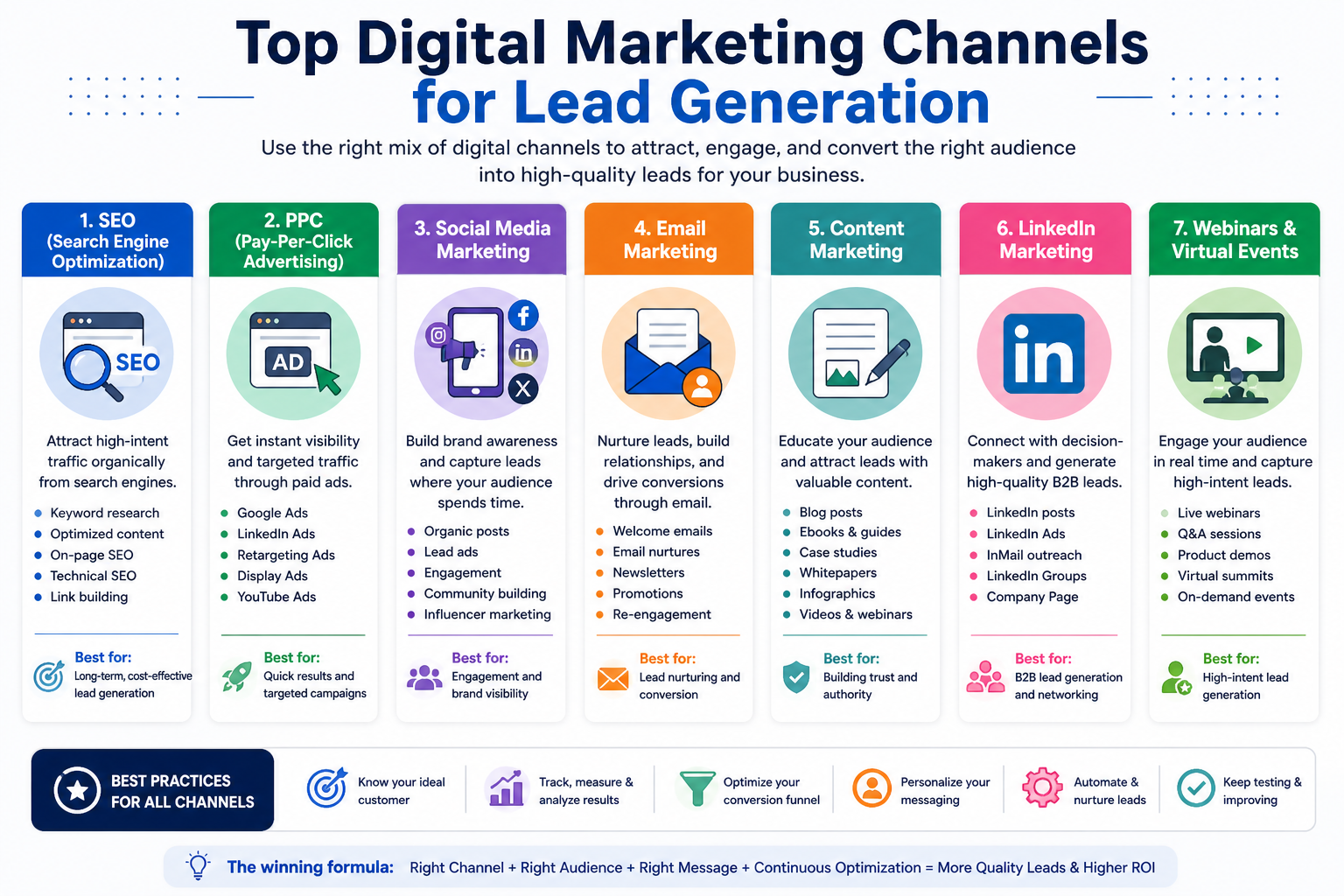
To keep your funnel full, you need a mix of lead generation channels. The best channel depends on your audience, offer, and budget.
SEO
Search engine optimization is still one of the most cost-effective lead generation strategies in 2026.
When your pages rank for high-intent keywords, you attract people who are already searching for answers. That often means better lead quality than broad paid traffic.
SEO works especially well for:
- B2B lead generation
- Local service businesses
- SaaS companies
- Agencies
- Professional services
A Chicago law firm, for example, can generate steady leads by ranking for local legal terms and publishing helpful content around business compliance.
PPC
Pay-per-click advertising gives you faster visibility. Google Ads, LinkedIn Ads, and retargeting campaigns can place your offer in front of the right audience at the right time.
PPC is useful when you want to:
- Launch quickly
- Test offers
- Reach high-intent keywords
- Retarget past visitors
The key is not just getting clicks. You need landing pages, clear offers, and conversion tracking to make paid traffic profitable.
Social Media Marketing
Social media helps build trust and attention before someone is ready to buy.
Platforms like LinkedIn, Facebook, Instagram, X, and even TikTok can support lead generation when used the right way. For B2B, LinkedIn remains a top option because it allows targeting by role, company size, and industry.
A US cybersecurity firm, for instance, might use LinkedIn thought leadership posts to attract IT directors, then move them to a webinar signup page.
Email Marketing
Email is one of the best channels for lead nurturing.
It helps you stay in front of leads, share useful content, and move people through the sales funnel over time. A strong email system can turn a basic signup into a future customer.
Effective email marketing includes:
- Welcome sequences
- Educational email series
- Product updates
- Re-engagement campaigns
- Demo or consultation offers
Content Marketing
Content marketing powers many of the channels above. Blog posts, videos, white papers, templates, and webinars all help attract and educate potential buyers.
High-quality content does two things at once:
- It brings in traffic
- It builds trust
That trust matters, especially in B2B lead generation where purchase decisions often involve longer sales cycles and multiple stakeholders.
LinkedIn and B2B Platforms
For many US companies, LinkedIn is one of the strongest lead generation platforms available.
It works well for:
- Account-based marketing
- Prospecting decision-makers
- Building authority
- Promoting webinars and lead magnets
- Starting direct conversations
Other B2B platforms, directories, and niche communities can also support outreach if your audience is active there.
Inbound vs Outbound Lead Generation
There are two main ways to generate leads: inbound and outbound.
Inbound Leads
Inbound lead generation focuses on attracting prospects to you through useful content and strong digital experiences.
Examples include:
- SEO content
- Webinars
- Social media posts
- Email newsletters
- Downloadable resources
Inbound usually takes longer to build, but it often produces higher-trust leads.
Outbound Leads
Outbound lead generation means reaching out first.
This can include:
- Cold email
- Cold calling
- Direct LinkedIn outreach
- Targeted prospecting campaigns
Outbound can deliver faster results, especially when you need to target specific accounts. But it works best when your data is accurate and your messaging is relevant.
The strongest teams usually use both. Inbound builds trust at scale. Outbound helps you go after high-value accounts directly.
Best Lead Generation Strategies in 2026
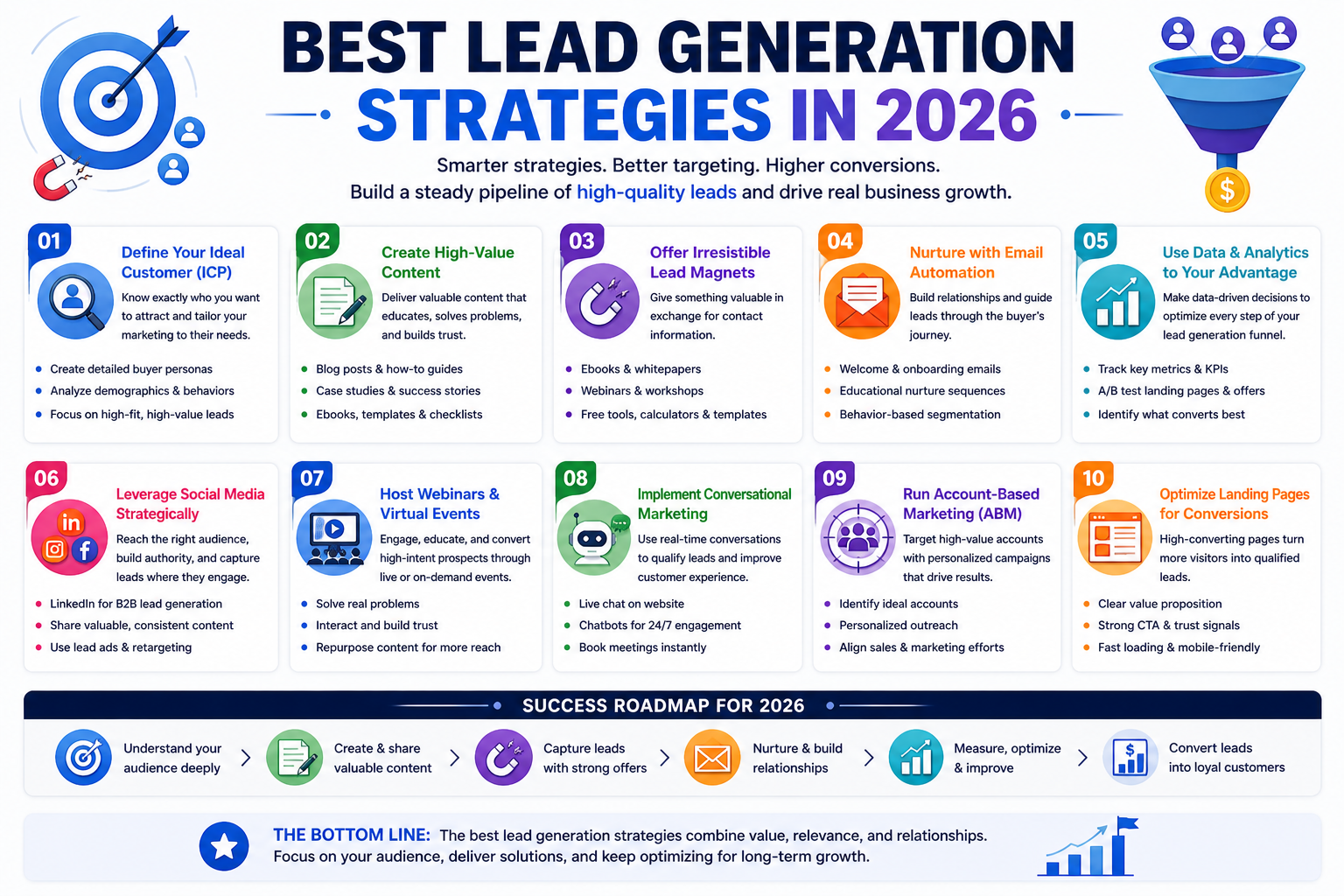
The market is crowded, so basic tactics are not enough. The best lead generation strategies in 2026 focus on relevance, speed, and personalization.
Personalization at Scale
Buyers expect content and outreach that fits their needs. Use behavior data, firmographic data, and industry context to tailor your landing pages, emails, and ads.
A startup selling HR software should not send the same message to a 10-person company and a 1,000-person enterprise.
Interactive Content
Static PDFs still work, but interactive tools often convert better.
Examples include:
- ROI calculators
- Assessments
- Quizzes
- Configurators
- Audit tools
These formats give users instant value and provide you with better qualification data.
Webinars and Virtual Events
Live and on-demand webinars still perform well, especially in B2B.
They help you educate prospects, answer objections, and capture leads who are actively researching solutions.
Conversational Marketing
Chatbots and live chat tools can qualify leads in real time. They can answer common questions, route visitors to the right pages, and book meetings instantly.
This improves user experience and shortens the path to conversion.
Account-Based Lead Generation
Instead of marketing to everyone, many B2B teams now focus on a set list of ideal accounts. This improves efficiency and helps both sales and marketing stay aligned.
Tools Used for Lead Generation
Automation and better data make modern lead generation possible. Most teams need a stack of tools to manage outreach, track engagement, and improve conversions.
CRM Systems
Tools like HubSpot and Salesforce help you store contact data, track touchpoints, score leads, and align sales with marketing.
A CRM gives you one place to manage the buyer journey from first click to closed deal.
Email and Automation Platforms
Platforms like ActiveCampaign, Mailchimp, and Klaviyo help automate email sequences based on what users do.
For example, if someone downloads a guide but does not book a demo, you can trigger a follow-up sequence automatically.
Real-Time Data Extraction Platforms
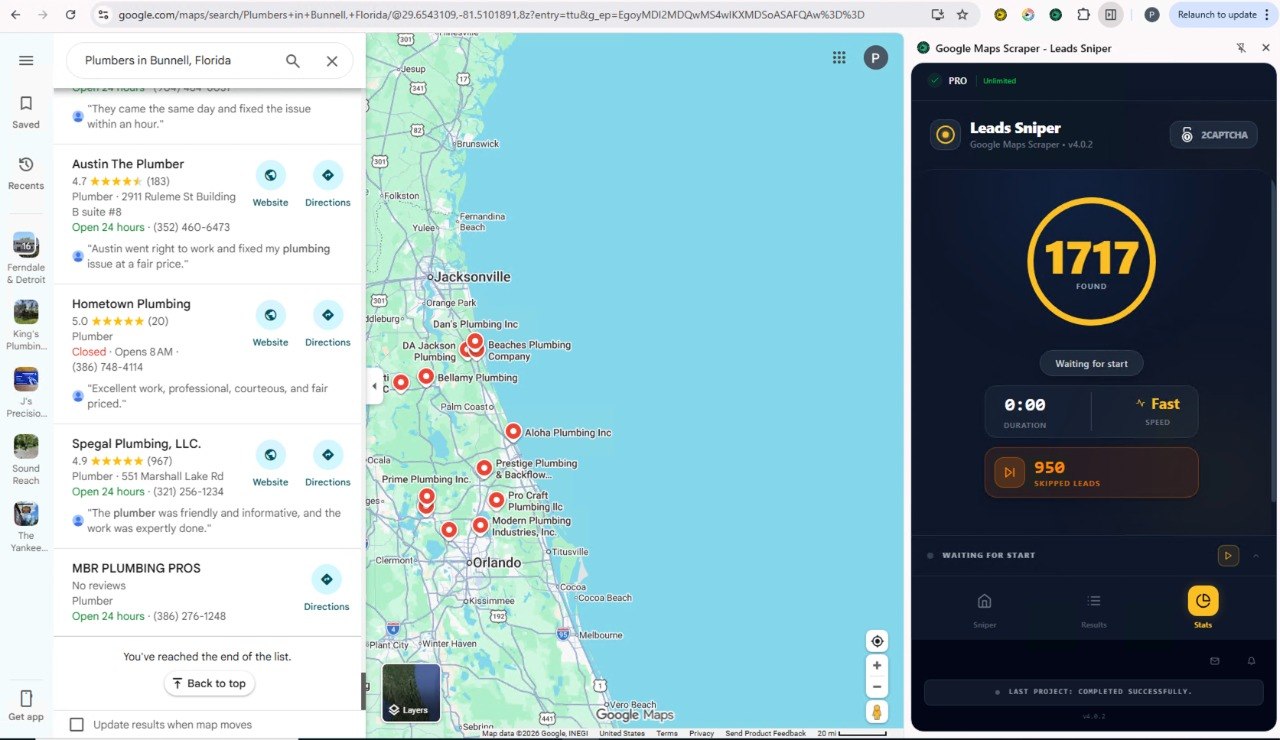
If you rely on outbound campaigns, outdated databases can waste time and money. That is why many teams now prefer tools that pull fresh information directly from live sources.
One modern option is Leads Sniper.
Leads Sniper helps businesses extract real-time data from sources like Google Maps, Google Search, and Yellow Pages. Instead of paying high monthly fees for aging contact databases, teams can gather fresh lead data when they need it.
That creates several clear benefits:
- Real-time data scraping
- No reliance on outdated databases
- A more cost-effective option than many subscription tools
- Fresh contact information for outbound lead generation
- Better support for targeted prospecting
For agencies, local service companies, and B2B sales teams, that can be a practical way to build lead lists with more accuracy and less waste.
Challenges in Lead Generation
Lead generation offers big rewards, but it also comes with common problems.
Quality vs Quantity
A large lead list may look good in a report, but it means little if those contacts are not a fit. Too many low-quality leads can slow down sales and hurt close rates.
Data Privacy and Compliance
Businesses need to be careful about how they collect, store, and use personal data. In the USA, rules around consent, outreach, and email marketing continue to matter.
Teams should review compliance standards before launching campaigns.
Rising Competition
Buyers see nonstop ads, emails, and content every day. To stand out, your messaging must be useful, specific, and timely.
Weak Sales and Marketing Alignment
If marketing sends leads that sales does not trust, the funnel breaks. Shared definitions for MQL, SQL, lead scoring, and follow-up speed are essential.
How to Improve Conversion Rates
Traffic alone does not grow revenue. Conversion rate optimization helps you get more value from the traffic you already have.
Run A/B Tests
Test different versions of:
- Headlines
- CTA buttons
- Form lengths
- Images
- Page layouts
Even small improvements can raise conversion rates over time.
Simplify Your Forms
Ask only for what you need. Every extra field creates friction.
For top-of-funnel offers, name and email may be enough. For bottom-of-funnel offers, you can ask for more.
Improve Site Speed
A slow site hurts both SEO and conversions. If pages load too slowly, visitors leave before they even see your offer.
Use Clear CTAs
Your calls to action should say exactly what happens next.
Good examples include:
- Download the Guide
- Book a Demo
- Get a Free Audit
- See Pricing
Clear CTAs reduce confusion and increase action.
Match the Offer to Intent
A first-time visitor may not want a sales call. They may want a checklist or guide instead. Align the offer with where the person is in the funnel.
Future Trends in Lead Generation
Lead generation is moving fast, and 2026 is shaping the next phase.
AI is now playing a larger role in:
- Predictive lead scoring
- Content personalization
- Chat-based qualification
- Campaign automation
- Sales outreach support
Real-time data is also becoming more important. Businesses want fresh signals, not stale contact lists from months ago. This is especially true for outbound teams that depend on accuracy.
Another major trend is intent-based marketing. Instead of waiting for form fills alone, businesses now look at behavioral signals like repeat visits, pricing page views, webinar engagement, and review-site activity.
Voice search and AI search engines also affect how content should be structured. Brands need pages that answer questions clearly, use strong headings, and provide direct definitions and examples.
The companies that win will be the ones that combine human messaging with smart systems, fresh data, and fast follow-up.
Frequently Asked Questions (FAQ)
What is lead generation in digital marketing in simple terms?
It is the process of attracting potential customers online and collecting their contact information so you can nurture them toward a sale.
What is the difference between lead generation and demand generation?
Demand generation builds awareness and interest in your brand or solution. Lead generation focuses on turning that interest into identifiable contacts.
What is the difference between MQL and SQL?
An MQL is a lead who engaged with marketing but is not yet ready for sales. An SQL is a lead who has shown stronger buying intent and is ready for direct sales outreach.
How much does B2B lead generation cost in the USA?
The cost varies by industry and channel. In many B2B sectors, cost per lead can range from around $50 to $200 or more depending on competition and offer quality.
What are the best digital marketing channels for leads?
Some of the top channels include SEO, PPC, content marketing, email marketing, LinkedIn, and direct outbound prospecting.
Why are my leads not converting?
Common reasons include weak targeting, poor follow-up, unclear offers, slow websites, and poor alignment between marketing and sales.
Is it legal to collect public business data online?
Collecting public business data may be allowed, but your outreach must still follow relevant laws and email compliance rules, including CAN-SPAM requirements in the USA.
Build a Stronger Lead Generation Engine in 2026
Understanding what is lead generation in digital marketing is the first step toward building a predictable growth system. When you know how the sales funnel works, how to classify leads, which channels to use, and how to improve conversions, your business can generate better pipeline with less waste.
Start by reviewing your current funnel. Look for weak spots in traffic, forms, follow-up, and lead quality. Then improve one stage at a time.
If your goal is stronger outbound prospecting, fresh data matters. Tools like Leads Sniper can help teams find real-time business information without relying on outdated databases or expensive subscriptions.
The next customer may already be searching for a solution like yours. Your job is to make sure they find you, trust you, and take the next step.


