Quick Answer: Lead generation techniques range from SEO content and cold email to AI-powered prospecting and intent-based targeting. The most effective B2B lead generation strategies in 2026 combine inbound and outbound methods, automate data collection with tools like Leads Sniper, and focus on lead quality over volume. This guide covers 25 proven techniques, the tools that support them, and how to build a system that scales.
Generating leads has never been harder. According to HubSpot's State of Marketing 2026, 61% of marketers say producing high-quality leads is their single biggest challenge. And that number keeps climbing.
The problem isn't traffic or visibility. Most businesses have enough of both. The real issue is that buyer behavior has changed faster than most lead generation strategies have kept up.
Today, 68% of B2B buyers have a front-runner vendor in mind before they ever speak to a sales rep, according to Forrester. By the time someone fills out your contact form, they've already done 70% of their research. That means the window for influence opens long before anyone visits your pricing page.
The businesses winning in 2026 aren't running more campaigns. They're using smarter lead generation techniques combining inbound content, targeted outbound, and AI-powered prospecting to find and qualify the right people at the right moment.
We put together this guide to give you a complete picture of what actually works. You'll find 25 proven lead generation strategies, the tools that support them, and a framework for building a system that generates consistent, qualified pipeline.
What Is Lead Generation?
Lead generation is the process of identifying and attracting potential customers for your business. A lead is any person or business that has shown interest in what you sell whether they've downloaded a guide, replied to an email, or simply visited your website multiple times.
The goal isn't just volume. A pipeline full of the wrong people wastes sales time and inflates cost per lead. Effective lead generation means finding prospects that match your ideal customer profile (ICP) and moving them through a structured funnel until they're ready to buy.
The Lead Generation Funnel
Most lead generation funnels follow this structure:
Types of Leads
- Marketing Qualified Lead (MQL): Has engaged with marketing content but hasn't been qualified by sales
- Sales Qualified Lead (SQL): Has been vetted by the sales team and meets ICP criteria
- Product Qualified Lead (PQL): Has used or trialed your product and shown buying signals
- Service Qualified Lead: Existing customer who has indicated interest in an upgrade or new offering
Why Most Lead Generation Efforts Fail
Before we walk through techniques, it's worth understanding why so many businesses struggle to generate leads consistently even when they're doing "everything right."
1. Poor Targeting
Casting a wide net sounds efficient. In practice, it burns budget on people who'll never buy. According to Landbase's 2026 qualification benchmark study, 67% of lost sales opportunities come directly from failing to qualify leads properly.
2. Weak Value Proposition
Prospects ignore outreach when they can't immediately see why your offer matters to them. If your messaging is generic, your reply rates will reflect it.
3. Low-Quality Data
Reaching the wrong person at the wrong company is a waste of everyone's time. Stale, inaccurate contact data is one of the most common and expensive problems in outbound lead generation.
4. Inconsistent Follow-Up
Research consistently shows that following up within five minutes of a lead signal makes a prospect nine times more likely to convert (FreJun, 2026). Most teams are still responding hours later or not at all.
5. Lack of Personalization
43% of recipients say they ignore outreach that feels impersonal or generic, according to Hunter.io data cited by InboxAlly. Generic messages get deleted. Personalized messages get replied to.
6. No Nurturing System
79% of leads never convert to sales without proper nurturing (FreJun, 2026). Capturing a lead is just the beginning what happens next determines whether it becomes revenue.
25 Proven Lead Generation Techniques

Inbound Lead Generation Techniques
1. SEO Content Marketing
How it works: You create long-form, keyword-targeted content that ranks in search engines and attracts prospects who are actively searching for solutions.
Why it works: SEO leads close at 14.6% compared to just 1.7% for outbound, according to Search Engine Journal data compiled by G2. The intent behind an organic search visit is fundamentally different from a cold call.
Best use cases: B2B SaaS, professional services, agencies, consulting firms.
Implementation steps:
- Research keywords your ICP searches at each stage of the funnel
- Build a content calendar around bottom-of-funnel queries (pricing, comparisons, alternatives)
- Optimize for featured snippets and People Also Ask boxes
- Build internal links between related posts to strengthen topical authority
- Convert traffic with inline CTAs and lead magnets
Pro tip: Organic CPL runs consistently lower than paid CPL across most industries (First Page Sage, 2026). SEO looks slow at the start but wins on unit economics over a 12-month horizon.
Common mistake: Targeting only informational keywords and ignoring commercial-intent queries like "[product] vs [competitor]" or "best [solution] for [industry]."
2. Programmatic SEO
How it works: You build large volumes of templated, data-driven pages that rank for long-tail variations of a core keyword.
Why it works: Instead of writing one page to rank for one term, you create hundreds of location-specific, industry-specific, or use-case-specific pages at scale.
Best use cases: SaaS platforms, marketplaces, directories, real estate, and any business with geographic or categorical variations in demand.
Implementation steps:
- Identify a core keyword pattern with high variation potential (e.g., "lead generation software for [industry]")
- Build a structured database of variables (locations, niches, verticals)
- Use a CMS or developer to auto-generate pages from the template
- Ensure each page has unique, substantive content not just swapped placeholders
- Monitor for duplicate content issues and cannibalization
Pro tip: Pair programmatic SEO with a strong internal linking structure so Google can crawl and index pages efficiently.
3. Lead Magnets
How it works: You offer something valuable a template, checklist, calculator, or report in exchange for an email address or contact details.
Why it works: It converts passive readers into identifiable leads. The quality of your lead magnet directly determines the quality of your list.
Best use cases: Email list building, top-of-funnel awareness, webinar sign-up preparation.
Implementation steps:
- Identify the most pressing problem your ICP faces
- Create a resource that solves a specific, narrow version of that problem
- Gate it behind a simple form (name, email, company)
- Set up an automated email sequence to nurture new subscribers
- Test different formats (templates outperform ebooks in most B2B contexts)
Common mistake: Building a broad, generic lead magnet that attracts everyone including people who will never buy.
4. Webinars
How it works: You host live or on-demand educational events that attract prospects, demonstrate expertise, and capture registrations.
Why it works: Webinars are among the most effective middle-funnel content formats. According to Content Marketing Institute research cited by Snov.io, 78% of B2B marketers rate webinars as highly effective for lead generation.
Best use cases: SaaS demos, thought leadership, product launches, partner co-marketing.
Implementation steps:
- Choose a topic your ICP cares about not a product pitch
- Promote through LinkedIn, email, and paid social 2–3 weeks in advance
- Use a registration page to capture lead data
- Send recordings to registrants who didn't attend
- Follow up with a targeted email sequence within 24 hours
Pro tip: Host joint webinars with a complementary brand to access their audience without competing for the same leads.
5. Video Marketing
How it works: You create educational, demonstration, or testimonial videos that attract and nurture prospects through organic and paid distribution.
Why it works: Video builds trust faster than any other content format. Prospects who watch a product video are more likely to convert than those who only read text.
Best use cases: Product demos, customer testimonials, explainer content, LinkedIn video posts.
Implementation steps:
- Map video types to funnel stages (awareness, consideration, decision)
- Publish on YouTube for long-term SEO value and on LinkedIn for organic reach
- Add clear CTAs in every video don't let viewers leave without a next step
- Repurpose long-form videos into short clips for social distribution
Common mistake: Producing high-production-value videos with no distribution strategy. A well-distributed low-fi video outperforms a polished one no one sees.
6. Case Studies
How it works: You document a real customer's problem, your solution, and the measurable results then publish it as a piece of conversion content.
Why it works: Case studies rank second in effectiveness among middle-funnel B2B formats, with 58% of marketers citing them as highly effective (CMI). They provide social proof at the exact moment prospects are comparing solutions.
Best use cases: Late-stage consideration content, sales enablement, industry-specific landing pages.
Implementation steps:
- Interview a customer who achieved a clear, quantifiable result
- Structure the story: problem → approach → outcome
- Include specific metrics (e.g., "reduced prospecting time by 60%")
- Publish as a standalone landing page, PDF download, and email asset
- Segment by industry or use case so prospects find the most relevant story
7. Interactive Tools
How it works: You build calculators, assessments, quizzes, or ROI estimators that prospects use to solve a specific problem and that capture lead data in the process.
Why it works: Interactive tools create high engagement and generate qualified leads because only people with a real interest in the problem will complete them.
Best use cases: SaaS ROI calculators, assessment tools, pricing estimators, marketing audit tools.
Implementation steps:
- Identify a calculation or assessment your ICP regularly performs manually
- Build a simple tool using Typeform, Outgrow, or a custom solution
- Gate the results page behind an email form
- Integrate results with your CRM for instant lead routing
- Drive traffic through SEO, LinkedIn, and paid ads
Outbound Lead Generation Techniques
8. Cold Email Outreach
How it works: You send targeted, personalized emails to prospects who match your ICP, with the goal of starting a conversation and booking a meeting.
Why it works: Email delivers between $36 and $42 for every $1 spent when highly targeted, according to combined Mailchimp and HubSpot data. The key word is "targeted."
Best use cases: B2B prospecting, agency new business, SaaS sales, partnership outreach.
Implementation steps:
- Build a precise, verified prospect list before writing a single email
- Write a subject line that feels personal, not promotional
- Open with a relevant observation about the prospect's business not about you
- Make one clear ask: a 15-minute call, a quick reply, feedback on an idea
- Run 4–6 touchpoints over 2–3 weeks before removing from the sequence
Key stats:
- Average cold email reply rate: 4.1–5.1% (InboxAlly and Sopro, 2026)
- Campaigns targeting fewer than 50 recipients average 5.8% reply rates vs. 2.1% for 1,000+ recipient campaigns (InboxAlly)
- Segmented email campaigns generate 30% more opens and 50% more click-throughs (Mailchimp)
Common mistake: Sending the same email to hundreds of prospects with only the name swapped. Prospects recognize it immediately, and reply rates collapse.
9. LinkedIn Prospecting
How it works: You identify target prospects on LinkedIn, engage with their content, and send personalized connection requests and messages.
Why it works: LinkedIn is used by 89% of B2B marketers for lead generation, and social outreach now outranks email for response rates 42% vs. 26% (HubSpot State of Marketing 2025). Prospects are simply more reachable there.
Best use cases: Enterprise sales, consultancy, SaaS, executive-level outreach.
Implementation steps:
- Use LinkedIn Sales Navigator to filter by job title, company size, industry, and location
- Engage with a prospect's content 2–3 times before sending a connection request
- Send a concise, personalized connection note one sentence, no pitch
- Follow up with a short, relevant message after connection is accepted
- Use LinkedIn Lead Gen Forms for paid campaigns to reduce friction
Pro tip: Personal profiles generate 5–10x more organic reach than company pages. Your sales team's personal LinkedIn activity is a more effective lead generation channel than your company page.
10. Multi-Channel Outreach
How it works: You reach prospects across multiple touchpoints email, LinkedIn, phone, and retargeting ads in a coordinated sequence.
Why it works: No single channel captures every prospect. Multi-channel sequences increase visibility and response rates by meeting people where they are.
Best use cases: Enterprise B2B, high-value accounts, account-based marketing campaigns.
Implementation steps:
- Start with a LinkedIn connection or content engagement (Day 1)
- Follow with a personalized email (Day 3)
- Add a LinkedIn message referencing the email (Day 5)
- Include a brief phone call for high-value accounts (Day 8)
- Retarget engaged prospects with LinkedIn or Google ads throughout the sequence
Common mistake: Treating each channel as a separate, siloed effort. Multi-channel only works when every touchpoint references the others and tells a consistent story.
11. Account-Based Marketing (ABM)
How it works: You focus your resources on a defined list of high-value target accounts rather than broad prospect pools, running personalized campaigns built specifically for each account.
Why it works: ABM concentrates effort on the accounts most likely to convert and spend the most. It's the opposite of spray-and-pray outbound.
Best use cases: Enterprise sales, complex B2B deals, long sales cycles.
Implementation steps:
- Define a Tier 1 account list (20–50 high-priority companies)
- Research each account's business context, tech stack, and key decision-makers
- Build personalized content and messaging for each account
- Align sales and marketing on outreach sequencing
- Track account-level engagement (not just individual lead activity)
Pro tip: 95% of deals go to vendors on the buyer's initial shortlist (6sense). ABM builds the brand awareness needed to get onto that shortlist before the formal evaluation begins.
12. Referral Outreach
How it works: You ask existing customers, partners, and network contacts to introduce you to potential buyers who fit your ICP.
Why it works: Referred leads arrive with pre-existing trust they've already heard positive things about you from someone they respect. They convert faster and churn less.
Best use cases: B2B services, consulting, SaaS, any business with strong customer relationships.
Implementation steps:
- Identify your happiest, most successful customers
- Ask specifically "Do you know anyone who deals with [specific problem]?"
- Offer a referral incentive that's meaningful without being transactional
- Follow up promptly when a referral is made speed matters
- Thank referring customers regardless of outcome
13. Strategic Partnerships
How it works: You build formal relationships with complementary businesses to co-market, co-sell, or exchange leads and referrals.
Why it works: Partners give you access to audiences you haven't built yourself. A partner's recommendation carries more weight than any ad you could run.
Best use cases: SaaS integrations, agency white-labeling, channel partnerships, co-marketing.
Implementation steps:
- Identify businesses that serve your ICP but don't compete with you
- Propose a mutual value exchange (co-created content, shared webinar, referral agreement)
- Formalize the arrangement with clear expectations on both sides
- Track partner-sourced leads separately so you can measure ROI accurately
- Invest in the relationship partners refer more when they feel valued
AI-Powered Lead Generation Techniques
14. AI Prospect Research
How it works: You use AI tools to research target companies and contacts at scale identifying firmographic fit, recent news, trigger events, and contact details faster than any human researcher could.
Why it works: Manual prospect research is the biggest time drain in outbound sales. AI compresses hours of research into minutes and produces richer prospect profiles.
Best use cases: SDR teams, agencies, high-volume outbound programs.
Implementation steps:
- Define the ICP criteria you want AI to screen for
- Use tools like Clay to pull enrichment from 50+ data sources in a single workflow
- Train AI prompts to identify specific trigger events (funding rounds, leadership changes, new product launches)
- Export enriched prospect lists to your CRM or outreach tool
- Review AI outputs for accuracy before sending outreach
15. Predictive Lead Scoring
How it works: Machine learning models analyze historical data to predict which leads are most likely to convert, letting sales prioritize the highest-value opportunities.
Why it works: According to Gartner, companies using predictive lead scoring see a 30% improvement in win rates and a 20% increase in sales productivity.
Best use cases: SaaS, mid-market and enterprise B2B, any business with enough historical lead data to train a model.
Implementation steps:
- Consolidate historical lead and customer data in your CRM
- Identify the attributes that correlate with conversion (company size, industry, engagement behavior, tech stack)
- Use a tool with predictive scoring built in (HubSpot, Salesforce, or a dedicated scoring platform)
- Route high-scoring leads to your best reps immediately
- Continuously retrain the model as new conversion data accumulates
16. AI Personalization
How it works: AI analyzes behavioral and firmographic data to generate personalized messaging, content recommendations, and outreach copy at scale without requiring manual research for each contact.
Why it works: Personalization is no longer a differentiator it's table stakes. 43% of recipients ignore outreach that feels generic (Hunter.io, cited by InboxAlly, 2026). AI makes personalization achievable at volume.
Best use cases: Cold email sequences, LinkedIn outreach, dynamic website content, nurture campaigns.
Implementation steps:
- Feed AI tools with rich data: company news, LinkedIn activity, website behavior, firmographics
- Use AI to generate a personalized first line for each outreach email
- A/B test AI-generated copy against manually written versions
- Set guardrails review AI-generated content for accuracy before sending
- Use dynamic website content to serve different messages to different visitor segments
17. Intent-Based Prospecting
How it works: You identify prospects who are actively researching topics related to your solution using intent data signals from third-party platforms and prioritize outreach to those with demonstrable buying intent.
Why it works: Programs that add behavioral and intent signals to their MQL criteria run a 16.4% MQL-to-SQL conversion rate nearly 70% above the unfiltered median of 9.8% (DigitalApplied, 2026). Intent means you're not guessing who's interested.
Best use cases: Enterprise B2B, account-based marketing, competitive displacement campaigns.
Implementation steps:
- Choose an intent data provider (Bombora, G2 Buyer Intent, ZoomInfo Streaming Intent)
- Set up alerts for accounts researching keywords relevant to your solution
- Prioritize accounts showing the highest intent score
- Build outreach sequences that reference the topic they're researching
- Layer intent data on top of your existing ICP list for maximum precision
18. Automated Lead Enrichment
How it works: When a new lead enters your CRM through any channel automated workflows pull additional data from external sources to build a complete profile without manual effort.
Why it works: Enriched leads enable better segmentation, more relevant outreach, and faster qualification. Reps spend less time on admin and more time selling.
Best use cases: Any business capturing inbound leads at volume.
Implementation steps:
- Set up enrichment integrations between your form tool and CRM (Clay, Apollo, Clearbit)
- Define the data points that matter most for qualification (company size, revenue, tech stack, job title)
- Trigger enrichment automatically on every new lead entry
- Use enriched data to route leads to the right rep or sequence automatically
- Audit enrichment accuracy quarterly data decays fast
19. AI-Assisted Outreach Sequences
How it works: AI tools help write, test, and optimize outreach sequences suggesting subject lines, body copy, follow-up messaging, and optimal send timing based on response data.
Why it works: AI can test copy variations at a scale impossible for human teams, finding the patterns that drive replies faster and with more statistical confidence.
Best use cases: High-volume cold email, LinkedIn outreach, SDR teams.
Implementation steps:
- Use a sequencing platform with built-in AI (Lemlist, Apollo, Salesloft)
- Let AI generate initial sequence drafts, then edit for brand voice
- A/B test subject lines, openers, and CTAs systematically
- Analyze reply sentiment not just reply rates to understand what's resonating
- Continuously feed performance data back into the AI to improve future sequences
Modern High-Converting Lead Generation Techniques
20. Community Marketing
How it works: You build or participate in communities where your ICP already gathers Slack groups, Discord servers, Reddit communities, LinkedIn groups providing value without overtly selling.
Why it works: Community members trust peer recommendations far more than branded outreach. A reputation built inside a relevant community generates warm inbound leads.
Best use cases: SaaS, B2B services, tools targeting developers or marketers.
Implementation steps:
- Identify 3–5 active communities where your ICP spends time
- Contribute genuine value: answer questions, share resources, facilitate discussions
- Build a personal presence before mentioning your product
- Create your own community if nothing suitable exists in your niche
- Track leads sourced from community activity in your CRM
21. Personal Branding
How it works: Founders, executives, and sellers build a public profile through consistent content LinkedIn posts, newsletters, podcasts, public speaking that positions them as credible voices in their industry.
Why it works: Buyers trust people, not logos. Personal profiles generate 5–10x more organic reach than company pages on LinkedIn (Leadinfo, 2026).
Best use cases: Founder-led sales, consulting, agencies, any business where the people behind the brand are part of the value proposition.
Implementation steps:
- Choose 1–2 platforms where your ICP is most active
- Commit to a consistent posting schedule (3–5 times per week on LinkedIn)
- Share specific opinions and original perspectives not reposts and generic advice
- Engage meaningfully in comments on others' posts
- Convert followers into leads with occasional, well-placed CTAs
22. Social Selling
How it works: Sellers use social platforms primarily LinkedIn to identify, research, and engage prospects through authentic relationship-building before any formal outreach.
Why it works: 35% of sales professionals say social media is their top source of high-quality leads, and 45% of social media users rate it "very effective" at driving sales higher than in-person meetings (HubSpot State of Marketing 2025).
Best use cases: B2B enterprise, professional services, long sales cycle businesses.
Implementation steps:
- Optimize your LinkedIn profile to speak to buyers, not recruiters
- Use Sales Navigator to build targeted prospect lists and track account activity
- Engage with prospect content consistently comments carry more weight than likes
- Send connection requests with a personalized note tied to something specific
- Move the conversation off-platform once you've established rapport
23. Product-Led Growth (PLG)
How it works: The product itself becomes the primary lead generation mechanism. Free tiers, trials, or freemium models let prospects experience value before committing and sign up without ever speaking to a sales rep.
Why it works: PLG creates a self-serve acquisition funnel. Users who've already experienced the product convert at dramatically higher rates than cold outbound leads.
Best use cases: SaaS tools, productivity software, developer tools, platforms with clear standalone value.
Implementation steps:
- Identify the "aha moment" the point where users realize the product's value
- Optimize the onboarding experience to reach that moment as quickly as possible
- Define product qualified lead (PQL) criteria based on usage signals
- Set up automated alerts when a free user hits PQL thresholds
- Design upgrade prompts that appear contextually, not randomly
24. Customer Advocacy
How it works: You turn satisfied customers into active promoters through formal advocacy programs, reference programs, and by systematically making it easy for them to share their experience.
Why it works: Peer recommendations convert faster than any marketing-generated lead. A customer reference from a recognized company can close an enterprise deal no campaign could.
Best use cases: B2B SaaS, professional services, enterprise sales.
Implementation steps:
- Identify your top 10–20% of customers by satisfaction score and outcomes achieved
- Ask them to participate in case studies, testimonials, or reference calls
- Create a formal referral incentive structure
- Feature advocates prominently in sales content and on your website
- Recognize and reward advocates publicly acknowledgment costs nothing
25. Retargeting Campaigns
How it works: You use paid advertising to serve targeted ads to people who've already visited your website, engaged with your content, or shown buying signals keeping your brand visible throughout their decision process.
Why it works: Most website visitors don't convert on the first visit. Only 2–3% of B2B website visitors convert without optimization (FreJun, 2026). Retargeting recaptures the other 97–98%.
Best use cases: Bottom-of-funnel conversion, abandoned trial recovery, competitive displacement.
Implementation steps:
- Install tracking pixels from LinkedIn, Google, and Meta on your website
- Build audience segments based on specific page visits (pricing page visitors, product page visitors)
- Create ads that reflect where each segment is in the funnel not generic brand awareness
- Cap frequency to avoid ad fatigue (3–5 impressions per week per user)
- Test different CTAs: free trial, case study download, demo booking
Best Lead Generation Tools for 2026
The market for lead generation software has split into distinct categories. Knowing which layer you need and which tools serve it best prevents expensive mistakes.
Featured Solution: Leads Sniper
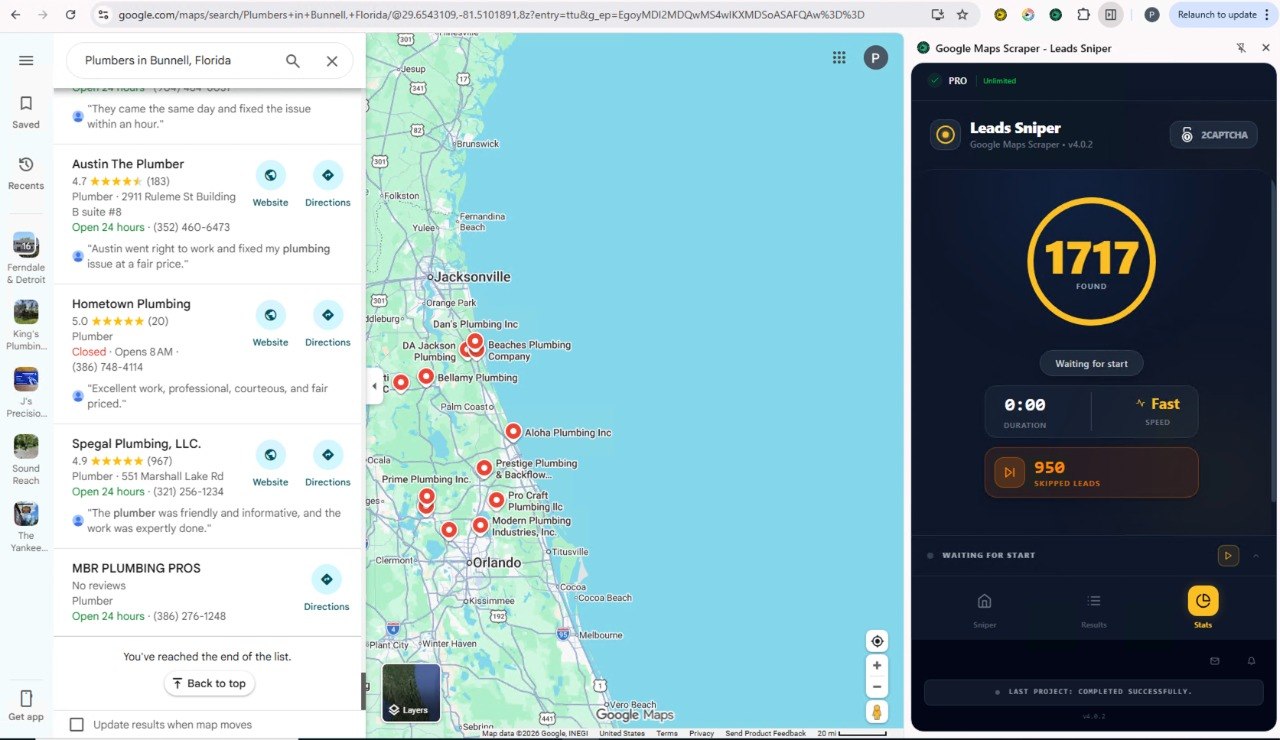
If your prospecting starts with finding the right businesses before you even have a contact name Leads Sniper is built for exactly that.
What it does: Leads Sniper is a web scraping platform that extracts business contact data from Google Maps, Google Search, Yellow Pages, and company domains. It automates the entire data collection process so teams can build targeted prospect lists without hours of manual research.
Key products:
- Google Maps Scraper — pulls business data (name, phone, address, reviews, category) from Google Maps listings, searchable by location and keyword
- Google Search Scraper — automates extraction from Google search results pages
- Yellow Pages Scraper — extracts contact details from Yellow Pages listings
- Domain Email Extractor — scrapes email addresses directly from company websites
Why it improves lead quality: The ability to filter by location, keyword, and business category means you're building lists of businesses that match your ICP not downloading a generic database and hoping for the best. Every lead is pulled from a live, current source.
Ideal users: Marketing agencies, local marketers, ecommerce agencies, B2B companies, entrepreneurs, coaches, and consultants.
Key advantages:
- One-time payment with lifetime access
- Unlimited leads with no monthly credit caps
- Free trial available
- No technical knowledge required
- 24/7 live chat support
- Trusted by 12,000+ companies and professionals
- Rated "Excellent" based on 100+ Trustpilot reviews
"Lead Sniper changed the game for me. One payment, unlimited leads, zero hassle." Jay Feldman (Leadgen Jay), YouTuber and lead generation expert
How to Build a Lead Generation System That Scales
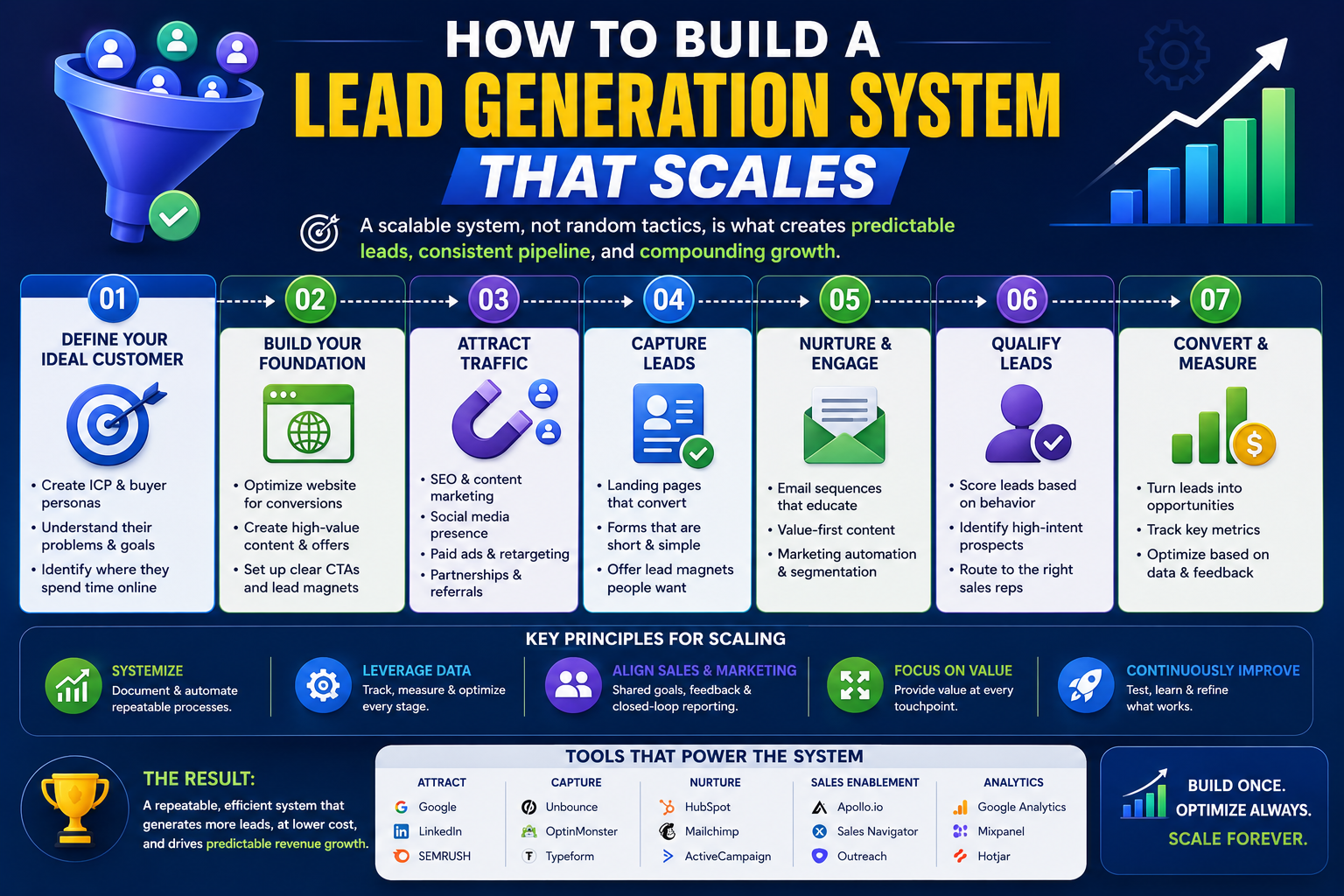
Running individual tactics in isolation produces inconsistent results. A system connects them.
Step 1: Define Your Ideal Customer Profile (ICP)
Get specific. Industry, company size, revenue range, geography, technology stack, team structure, and the specific problem your solution solves. The tighter your ICP definition, the more efficient your prospecting.
Step 2: Build and Verify Prospect Lists
Use tools like Leads Sniper to scrape businesses that match your ICP from live data sources. Supplement with a contact database for individual email addresses and phone numbers. Verify emails before sending high bounce rates damage your sender reputation and deliverability.
Step 3: Qualify Before Outreach
Not every business that matches your ICP is ready to buy. Add basic qualification criteria minimum company size, relevant tech stack, evidence of budget before routing to your outreach sequences.
Step 4: Personalize at Scale
Use enrichment data to generate personalized first lines. Reference a prospect's recent news, LinkedIn content, or specific business context. Even one personalized sentence per email produces measurable lift in reply rates.
Step 5: Automate Follow-Up Workflows
Set up sequences that trigger follow-up automatically based on behavior email opens, link clicks, website visits. Sales reps should be alerted when a prospect shows intent signals, not manually checking dashboards.
Step 6: Nurture Leads That Aren't Ready
79% of leads never convert without nurturing (FreJun, 2026). Route non-responsive leads into a longer-term nurture sequence with educational content, case studies, and product updates. Touch them every 4–6 weeks until they signal buying readiness.
Step 7: Track, Measure, and Iterate
Review pipeline metrics monthly. Cut what isn't working. Double what is. Lead generation systems improve through consistent iteration not by adding more tactics.
Lead Generation Metrics You Should Track
Common Lead Generation Mistakes to Avoid
1. Chasing Volume Instead of Quality
More leads doesn't mean more revenue. 37.7% of marketers are under pressure to deliver MQLs regardless of quality (Prospeo, 2026). That pressure creates pipeline noise, not pipeline.
2. Skipping ICP Definition
Without a defined ICP, every channel underperforms. Time spent defining who you're targeting pays back in every part of the funnel.
3. Using Stale or Unverified Data
Outdated contact data wastes outreach effort and hurts email deliverability. Verify lists before sending every time.
4. Treating All Leads the Same
Not every lead deserves the same follow-up sequence. Use lead scoring to route high-intent prospects to your best reps and low-intent prospects to nurture sequences.
5. Focusing Only on the Top of the Funnel
Getting leads in the door matters. But companies that excel at lead nurturing generate 50% more sales-ready leads at 33% lower cost, according to Forrester Research. Mid- and bottom-funnel investment pays.
6. Slow Follow-Up
The conversion lift for following up within five minutes is nine times higher than responding hours later (FreJun, 2026). Automate the first response so speed isn't dependent on a rep being available.
7. Ignoring Existing Customers
Your current customers are your best source of referrals, expansions, and advocacy. Most lead generation programs ignore them entirely.
8. Sending Generic Outreach
A cold email with only the name personalized isn't personalized. Prospects recognize it, and they delete it.
9. Running Channels in Silos
Email, LinkedIn, and paid ads work better together than separately. Multi-channel sequences coordinated around the same account consistently outperform single-channel outreach.
10. Not Testing or Iterating
Running the same sequence for six months without reviewing performance means slow losses compound invisibly. Review metrics monthly and cut what isn't working.
11. Misaligning Sales and Marketing
When marketing defines MQL too broadly, sales teams waste time on low-quality leads and lose faith in the funnel. Agree on a shared definition and review it quarterly.
12. Neglecting the Buying Journey's Early Stages
95% of deals go to the vendors on the buyer's initial shortlist (6sense). If your brand isn't visible early in the research phase, no amount of late-stage outreach compensates.
Future Trends in Lead Generation
AI Agents for Autonomous Prospecting
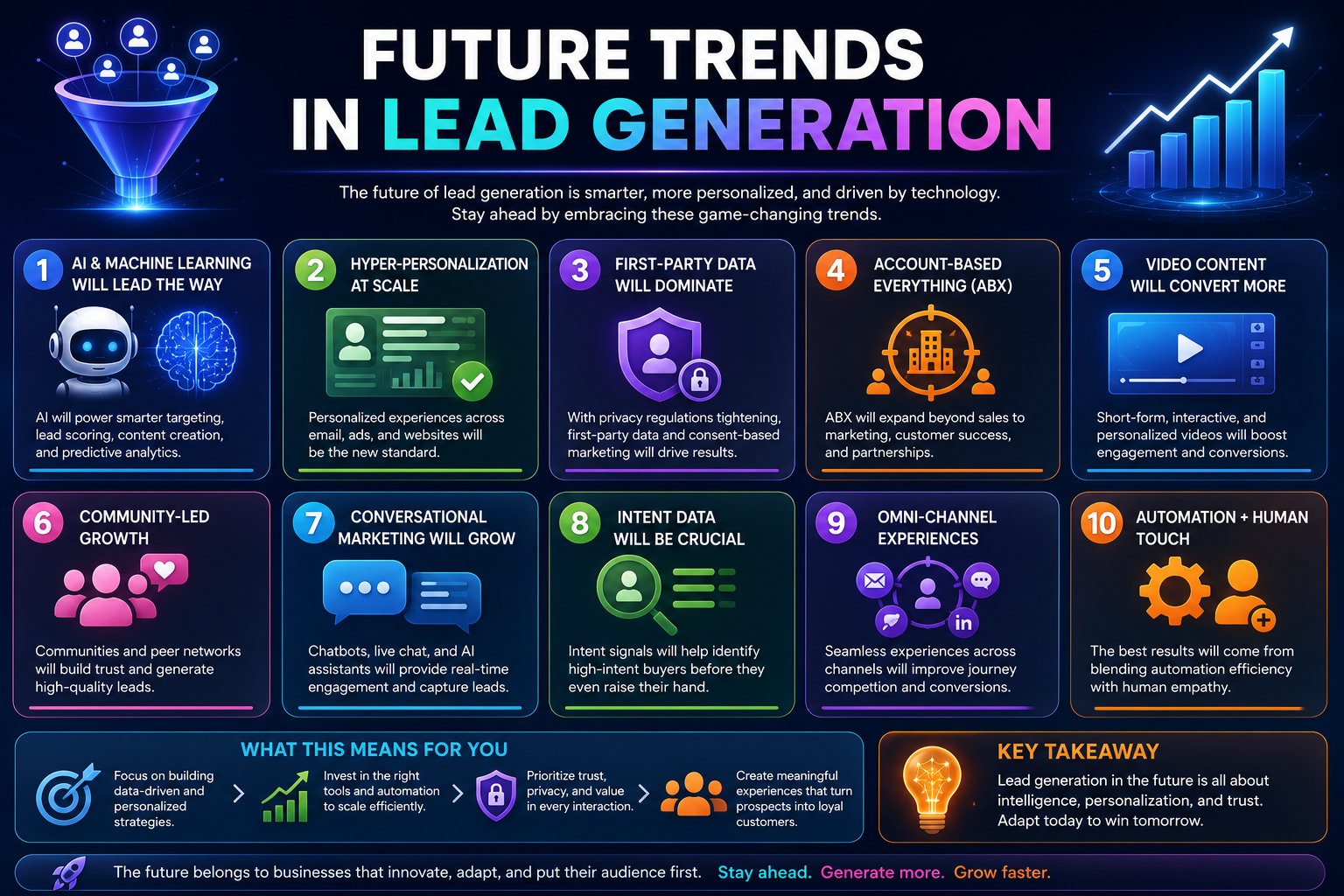
AI agents are moving from assistance to autonomy. In 2026, early adopters are deploying agents that identify target accounts, enrich contact data, write personalized outreach, send emails, manage LinkedIn touchpoints, qualify replies, and route booked meetings to the CRM all without human intervention at each step. Teams that had five SDRs are now running the same volume with one.
Intent Data as Standard Infrastructure
Third-party intent data signals from companies actively researching topics related to your solution is shifting from a premium add-on to a baseline requirement for competitive outbound programs. Programs using intent signals run a 16.4% MQL-to-SQL conversion rate vs. the industry median of 9.8% (DigitalApplied, 2026).
First-Party Data as Competitive Advantage
Third-party cookies are gone. The teams building proprietary first-party data assets website visitor identification, behavioral tracking, enriched CRM profiles have a compounding advantage that can't be purchased from a data provider.
Hyper-Personalization at Scale
AI makes it possible to personalize every outreach touchpoint based on real behavioral and contextual signals. The floor for "acceptable" personalization keeps rising. Generic messaging becomes less effective every quarter.
Generative Engine Optimization (GEO)
Google's AI Overviews, ChatGPT, and Perplexity now answer many B2B questions directly without a click. Research shows only 8% of users click through after seeing an AI Overview (Leadinfo, 2026). Brands that structure their content to appear in AI-generated answers will capture brand awareness in channels that don't show up in Google Analytics.
Practical GEO steps:
- Structure content with direct, specific answers to buyer questions
- Use clear headings, bullet lists, and definitions that AI systems can extract
- Back claims with verifiable statistics and named sources
- Focus on long-tail conversational queries your ICP uses with AI tools
Privacy-First Lead Generation
GDPR in Europe, CCPA in California, and evolving regulations globally are raising the compliance stakes for outbound programs. TCPA violations now carry penalties of $500–$1,500 per call, making unverified dialing a board-level financial risk (Sopro, 2026). Privacy-compliant lead generation built on verified data, proper consent, and GDPR-native tooling is no longer optional.
Frequently Asked Questions
What is the most effective lead generation technique for B2B?
The most effective B2B lead generation techniques depend on your sales cycle and deal size. For high-volume outbound, cold email with verified, targeted data produces the most predictable results. For long-term, compounding pipeline, SEO content marketing delivers the lowest CPL over a 12–18 month horizon. Most high-performing B2B programs combine both: outbound for near-term pipeline, inbound for sustainable lead flow.
How much does B2B lead generation cost?
The median B2B cost per lead reached $213 in 2026, according to HubSpot State of Marketing data. Top-quartile programs achieve $84 CPL through disciplined ICP targeting. Bottom-quartile programs spend $397 per lead. CPL varies significantly by industry from $91 in eCommerce to $982 in Higher Education, according to First Page Sage's 2026 industry report.
What's the difference between inbound and outbound lead generation?
Inbound lead generation attracts prospects to you through content, SEO, and social media they find you when they're ready to research. Outbound lead generation involves proactively reaching out to target prospects through cold email, LinkedIn, phone, and paid advertising. Choose inbound if you have time to build long-term organic pipeline. Choose outbound if you need pipeline now. Most effective B2B programs use both.
How do I generate leads without a big budget?
The lowest-cost lead generation techniques include cold email outreach to a manually-built prospect list, LinkedIn prospecting through organic engagement, SEO content built around specific buyer questions, referral programs with existing customers, and community participation. Tools like Leads Sniper provide a cost-effective way to build targeted prospect lists with a one-time investment rather than ongoing subscription fees.
What's the best tool for finding business leads?
The best tool depends on what kind of lead you're looking for. Leads Sniper is highly effective for scraping business data