



Driving demand and closing deals in the B2B SaaS space has fundamentally changed. If your sales team still relies on buying static email lists and sending 10-step generic email sequences, your response rates are likely plummeting. We are operating in a new ecosystem defined by AI-driven search, zero-click content journeys, and a severe data accuracy crisis.
For tech founders, SaaS marketers, and growth teams, mastering how to generate high-quality tech leads in this environment is a matter of survival. This guide breaks down exactly how top-tier companies are adapting their strategies to build predictable, scalable revenue engines in 2026.
TL;DR Summary
- The Problem: Traditional volume-based tactics are failing due to severe buyer fatigue, aggressive AI spam filters, and zero-click search journeys.
- The Shift: Successful companies have pivoted from raw lead volume to a model of intent-based, highly Verified Leads.
- Key Strategies: You need to integrate AI-powered prospecting, programmatic SEO, dynamic personalization, and powerful data extraction tools like Leads Sniper.
- The System: We introduce the Verified Lead Engine Framework, a step-by-step system to capture, enrich, and convert high-value decision-makers this year.
What is Lead Generation for Tech Companies in 2026?
Historically, tech lead generation meant filling the top of the funnel with as many email addresses as possible and hoping a small percentage converted. That era is over.
Today, B2B lead generation is the hyper-targeted process of identifying and capturing exact decision-makers—CTOs, CIOs, VPs of Engineering—at the precise moment they experience a problem your software solves. It is about intercepting buyer intent through social signals, technographic usage data, and AI-powered search queries. You are no longer casting a wide net; you are using a spear.
Why Traditional Lead Generation is Failing
If you are wondering why your outbound campaigns are suddenly hitting a wall, you have to look at the massive shifts in data and technology. The spray-and-pray model is dead for three main reasons:
1. The Data Accuracy Crisis
With the great reshuffle and continuous shifts in the tech sector, static B2B databases decay at an alarming rate of over 30% per year. If you buy a list that is six months old, a third of those people no longer work at those companies. You end up sending pitches into the void, driving up your bounce rates.
2. Aggressive AI Inbox Protection
Google and Microsoft have implemented highly strict AI filters to protect user inboxes. Mass emails lacking extreme personalization or proper domain authentication are now blocked at the server level before they even reach the spam folder.
3. The Zero-Click Journey
B2B buyers now use tools like ChatGPT, Perplexity, and Google's AI Overviews to research software solutions. They get their answers without ever clicking a link to visit your website. If your brand is not recognized as an entity by these AI engines, you become invisible during the research phase.
The Shift from Volume to Verified Leads
SaaS growth no longer scales by increasing your daily email sending limits. The secret to B2B lead generation in 2026 lies in prioritizing verification over volume.
A "Verified Lead" is a prospect who fits your exact Ideal Customer Profile (ICP), shows verifiable intent signals, and has real-time, validated contact information. Transitioning to this model means you can achieve open rates above 60% and significantly shorten your sales cycles, rather than settling for the industry average 15% open rate.
Top 7 Lead Generation Strategies for Tech Companies in 2026
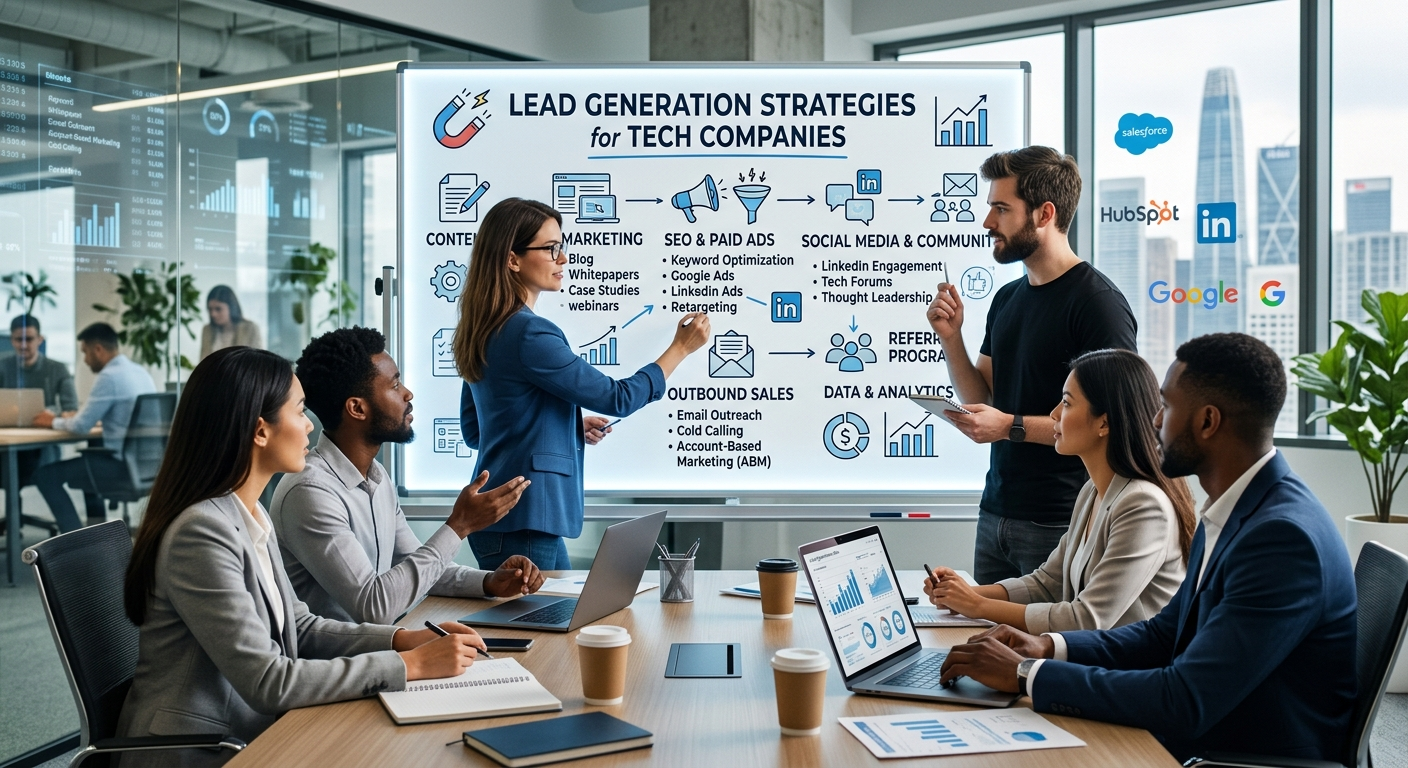
To win market share, you need to update your tactical playbook. Here are the seven strategies driving high-quality SaaS growth right now.
1. AI-Powered Prospecting
Artificial intelligence tools now allow you to analyze natural language across the web. You can track browsing behavior, role changes on LinkedIn, and company news (like fresh funding rounds or mergers) to predict exactly when a company is ready to buy your software. AI helps synthesize this data to draft highly relevant opening lines for your outreach.
2. Intent-Based Lead Generation
Instead of targeting a massive Total Addressable Market (TAM), growth teams use intent data to focus their resources exclusively on the 5% of the market actively looking for a solution. Monitor specific keywords and technology stacks. If you sell compliance software and an ICP company just posted a job listing for a "SOC2 Compliance Director," that is a massive intent signal you must act on immediately.
3. LinkedIn and Social Selling at Scale
B2B buyers trust personal brands far more than corporate logos. LinkedIn remains a goldmine, but pure automation is heavily penalized. The current winning strategy involves founders and SDRs posting native, high-value content, sharing zero-link case studies to favor the algorithm, and manually engaging in private communities to build trust before the pitch.
4. Programmatic SEO (pSEO)
Programmatic SEO allows tech companies to scale their organic presence by automatically generating thousands of highly targeted landing pages. You can create comparison pages like "YourSoftware vs Competitor" or integration pages capturing long-tail, low-competition search queries. This intercepts buyers at the very bottom of the funnel when they have high purchase intent.
5. Data Scraping and Enrichment (Featuring Leads Sniper)
Having the correct contact information is the foundation of any successful campaign. You cannot rely on expensive, outdated static databases. The best way to get accurate leads in 2026 is to extract them directly from the source in real time.
This is where Leads Sniper becomes an absolute game-changer. Leads Sniper is a powerful web extraction automation service built specifically for B2B companies. It allows you to extract thousands of fresh leads directly from key platforms:
- Google Maps Scraper: Perfect for finding local businesses or highly specific niches, ensuring you get 100% up-to-date contact details.
- Domain Email Extractor: Once you have a list of prospect domains, this tool scans every page of their website to extract the correct email addresses of the actual decision-makers.
- Search & YellowPages Scrapers: Automate data collection from Google search results, saving your SDRs hundreds of hours of manual research.
- Lifetime Value: Unlike traditional SaaS data platforms that charge exorbitant monthly subscriptions, Leads Sniper offers one-time payment packages for unlimited leads. This drastically reduces your Customer Acquisition Cost (CAC) while guaranteeing data freshness.
6. Cold Outreach Personalization at Scale
Using "Hi [First_Name]" is no longer personalization. Real personalization means mentioning a podcast your prospect recently appeared on, commenting on their company's latest quarterly report, or referencing a specific challenge their competitor is facing. You can use Large Language Models (LLMs) to synthesize this research and weave it naturally into your cold emails in seconds.
7. Multi-Channel Outbound Systems
A successful outbound cadence does not rely on email alone. Your workflow must coordinate warm emails, direct LinkedIn messages (voice notes work incredibly well right now), and occasional hyper-targeted phone calls based on previous engagement. Surrounding the prospect across multiple channels builds familiarity and trust.
The Step-by-Step Lead Generation Framework
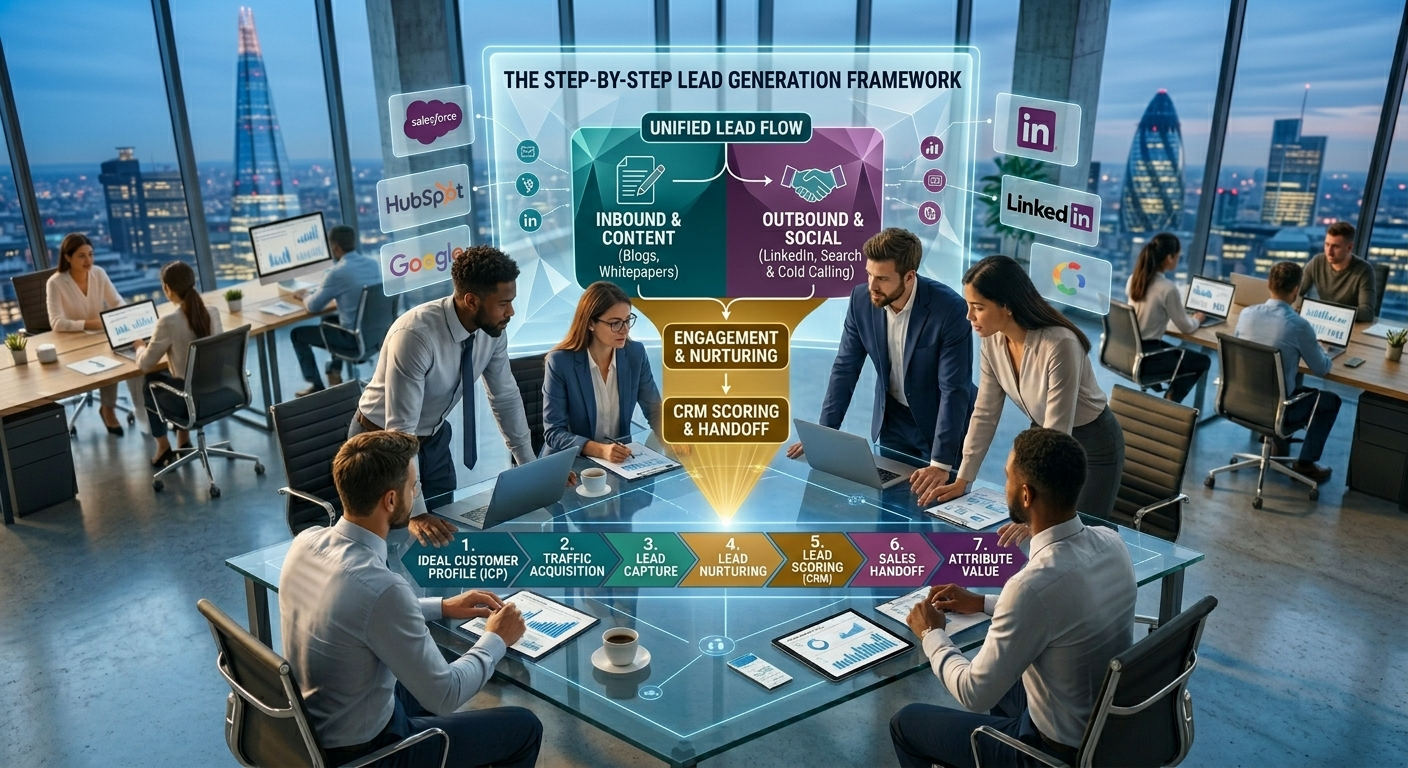
To put these strategies into practice, we designed the Verified Lead Engine Framework. Implement these exact steps with your growth team to build a predictable pipeline:
Step 1: Intent Mapping. Identify the top three triggers indicating a company needs your solution. Examples include raising capital, hiring for specific software roles, or using a competitor's legacy product.
Step 2: Real-Time Extraction. Use automated tools like Leads Sniper to scrape fresh data from the web based on those exact intent triggers. Scraping in real time guarantees absolute accuracy and bypasses the data decay problem.
Step 3: Dynamic Enrichment. Pass your scraped domains through a domain email extractor to pull direct contact details. Cross-reference this with LinkedIn data to identify the full buying committee.
Step 4: Strict Verification. Never skip this step. Run your extracted emails through a bounce checker to ensure deliverability. Protecting your domain reputation is critical.
Step 5: Message Triangulation. Use AI to write emails that seamlessly connect the intent trigger (Step 1) with the specific pain point of the prospect's role.
Step 6: Multi-Channel Handoff. Launch the campaign simultaneously via email and LinkedIn. The moment a prospect shows high engagement or replies, transition them from the automated system to a human SDR to close the meeting.
Best Tools for Tech Lead Generation
Having the right tech stack makes all the difference. Here is a comparison of top-tier tools for your 2026 lead generation engine:
Common Mistakes to Avoid
Even with the best tools, small errors can ruin your campaigns. Avoid these common pitfalls:
- Ignoring Domain Reputation: Sending thousands of emails from your primary domain will destroy your deliverability. Always set up secondary sending domains and authenticate them properly (DMARC, DKIM, SPF).
- Selling Features Over Outcomes: Tech decision-makers do not buy a "faster API." They buy a "20% reduction in server costs." Focus entirely on the business outcome and ROI.
- High-Friction Conversion Paths: If you force prospects to fill out a 15-field form just to read a case study, you will lose them. Remove barriers, ungate your content, and rely on backend data enrichment to identify who is reading your materials.
Future Trends: Where We Are Heading
The technology driving B2B sales continues to evolve rapidly. Stay ahead of the curve by preparing for these upcoming shifts:
- Autonomous AI Agents: Soon, AI will not just draft your emails. Autonomous agents will handle objection handling in real-time and negotiate meeting times directly with the AI agents of your prospects.
- Zero-Click Community Building: Because platforms want to retain users, you must learn to generate demand directly within LinkedIn feeds, Reddit threads, and private Slack communities without requiring the user to click away to your website.
- First-Party Data Dominance: As privacy regulations tighten globally, owning your audience will become your most valuable asset. Building an engaged email list and community (first-party data) will outperform relying on third-party data providers.
Frequently Asked Questions (FAQ)
What is the difference between B2B and B2C lead generation?
B2B (Business to Business) sales cycles are much longer, involve multiple decision-makers, and carry a significantly higher average contract value. B2B requires a highly logical, ROI-driven approach, whereas B2C often relies on emotion and impulse purchasing.
Are data scraping tools legal for B2B lead generation?
Yes. Extracting publicly available data from the web—such as business information from Google Maps or generic emails published on corporate websites—is standard industry practice. However, you must ensure you comply with local communication regulations, like the GDPR in Europe or CAN-SPAM in the US, when reaching out to those leads.
How much should a SaaS startup invest in lead generation tools?
A general rule for growth-stage tech companies is to reinvest 20% to 30% of projected revenue into marketing and sales. However, you can build a highly robust outbound stack (scraping, sending, enriching) for under $500 a month if you utilize smart, one-time payment tools for your base data extraction.
Why is a real-time web extractor better than a standard B2B database?
Traditional B2B databases only update their records every 3 to 6 months. In the fast-moving tech sector, this leads to massive email bounce rates. Real-time extraction tools pull information directly from the live web at the exact moment you run the search, ensuring maximum accuracy and protecting your sender reputation.
Next Steps for Scaling Your Tech Company
The technology behind B2B sales has advanced, but the fundamental psychological principles remain unchanged: offer real value, solve critical problems, and show up at the exact right time.
By combining the Verified Lead Engine Framework with precise, cost-effective data extraction tools, you position your tech company to dominate its market share. Do not let competitors steal your ideal customers simply because they have better data hygiene. Review your current outbound processes, implement intent-based systems, and equip your team with the right tools to win.
Start building your database of verified leads today. Explore how real-time data extraction can bypass stale databases, lower your acquisition costs, and transform your sales pipeline for 2026.


