The playbook for capturing buyer interest has changed dramatically. What worked in digital marketing and sales just a few years ago no longer delivers predictable results. In 2026, digital channels are more crowded and competitive than ever. Buyers whether B2B or B2C are technologically savvy, research-driven, and heavily influenced by AI-curated content, reviews, and recommendation engines.
Privacy regulations are tightening, third-party cookies are nearly extinct, and inboxes are overflowing with automated outreach. Navigating these challenges requires more than generic tactics; it demands a thoughtful, strategic, and technology-enabled approach.
For business owners, sales teams, and marketers in the USA, these shifts bring both challenges and opportunities. Advanced AI and automation can help us zero in on ideal prospects, deliver timely, relevant messages at scale, and personalize every touchpoint from content to cold outreach.
However, success now hinges on merging inbound attraction with high-impact outbound initiatives, integrating smarter data sourcing, and continuously optimizing for both humans and answer engines.
Learning how to generate leads online in 2026 means mastering the art of omnichannel prospecting, using tools and strategies that cut through noise, gain attention, and convert interest into real pipeline. In this guide, we’ll map out practical frameworks, proven tactics, and powerful tools to future-proof your lead generation from high-value content and SEO, to programmatic ads, to building and engaging laser-targeted prospect lists using modern automation.
For USA business owners, sales leaders, and marketers, the primary goal remains unchanged: fill the B2B sales pipeline with qualified prospects who show high purchase intent. However, the methodology to achieve this has evolved rapidly.
Search engines now respond with generative intelligence, advertising platforms demand surgical precision, and direct outreach requires levels of personalization that only modern technology can scale.
This guide provides a detailed blueprint for mastering prospect targeting in 2026. We will explore everything from passive inbound attraction to aggressive outbound data extraction. By the end of this deep dive, you will have an actionable, data-driven framework to build a predictable and scalable revenue engine for your business.
The Evolution of How to Generate Leads Online in 2026
The digital environment has experienced a fundamental shift driven by the massive adoption of artificial intelligence and automation. In 2026, AI is no longer just a back-office tool but an active co-pilot in almost every phase of lead generation. Buyers navigate the web expecting instant answers, hyper-personalized recommendations, and seamless digital experiences.
Here’s how these forces are changing how to generate leads online:
- AI-Powered Content Discovery: Search engines like Google now surface answers directly, using AEO (Answer Engine Optimization) as the new battleground. A prospect searching for “best B2B CRM for insurance brokers” will see summarized, sourced recommendations from AI-generated overviews, not just a list of blue links. Companies with structured, data-rich content are favored and cited as authorities leading to higher quality, high-intent leads landing on their pages.
- Dynamic Personalization at Scale: Automation platforms analyze behavioral data (pages viewed, webinars attended, even social engagement) and deliver dynamic website content, personalized chatbots, and email nurture flows tailored to each prospect’s journey. For example, a US-based SaaS provider can instantly show insurance-specific case studies to a returning visitor from a brokerage IP address, increasing demo requests by 40%.
- Predictive Prospecting: AI models crunch third-party firmographic data, engagement triggers, and historic conversion signals to score and prioritize leads automatically within your CRM. A manufacturing company might receive a daily shortlist of “hot prospects,” curated from hundreds of online signals and ready for targeted outreach often before a competitor knows the opportunity exists.
- Real-World Automation: Chatbots handle initial qualification on landing pages 24/7, booking meetings right to a rep’s calendar. Robotic process automation (RPA) scripts can scrape new business registries, scan social profiles for job changes, and add relevant contacts to an outbound sequence within minutes.
- Example in Practice: A B2B agency in Texas used automated Google Maps data extraction and AI-driven enrichment to build targeted local lists, identifying 150 qualified medical practices underserved in digital advertising. By automating personalized outreach, they booked 15 meetings per week and closed $250k in new contracts in a single quarter proving how to generate leads online today demands this blend of AI, automation, and smart human follow-up.
AI and automation are not optional extras they’re the new competitive edge for any business aiming to dominate lead generation in a saturated digital landscape.
Answer Engine Optimization (AEO) and AI-Driven Search
Traditional SEO focused on ranking web pages for specific keywords. Now, understanding how to generate leads online means shifting your focus toward Answer Engine Optimization (AEO). Tools like ChatGPT, Claude, and Google's AI Overviews summarize information from multiple sources to provide direct answers to user queries.
To capture attention in this environment:
- Corporate content must directly answer specific questions asked by your target audience.
- Build out detailed knowledge bases, publish real case studies, and provide technical articles that AI engines source from.
- Structure your content with clear, concise H2/H3 headings that match user questions.
- Use bullet points to quickly present complex information.
When an AI engine cites your company as a source in its dialogue, the resulting traffic has exceptionally high conversion intent. Optimizing your content for language models means capturing the most valuable prospects long before those buyers ever visit your website.
Inbound Strategies: Building a Magnetic B2B Sales Pipeline

Here are three specific lead magnet ideas you can implement:
- 2026 Trend Report: A downloadable PDF covering key market changes and industry predictions, packed with original data and insights from leading experts. This resource builds your brand authority and motivates decision-makers to share their contact details, particularly executives interested in strategic planning.
- Interactive ROI Calculator: A web-based tool allowing prospects to input their figures and instantly see the potential impact of adopting your solution or service. This provides immediate, practical value, engages users, and drives conversions by demonstrating results before any direct sales contact.
- Free Mini-Course or Workshop: Offer a short email course, an on-demand video series, or a virtual micro-workshop focused on solving a relevant challenge for your audience. For example, “How to Triple Your B2B Sales Meetings Using Automation in 2026.” This content positions you as an active mentor and builds trust from the first interaction.
High-Value Lead Magnets and Content Clusters
The foundation of any successful inbound strategy is content that educates, informs, and solves specific pain points for your target audience. In the B2B sector, this means producing:
- Industry reports and benchmarks
- ROI calculators and workflow templates
- Technical webinars and explainer videos
Here are three high-impact lead magnet ideas you can deploy:
- 2026 Industry Trend Report: A comprehensive PDF packed with new data, predictions, and expert analysis. This positions your brand as a thought leader and encourages executive-level opt-ins.
- Interactive ROI Calculator: Embed a tool on your website allowing prospects to input their numbers and instantly see how much they could save or earn by using your solution.
- Free Mini-Course or Workshop: Deliver a series of bite-sized video lessons or host an on-demand workshop that helps solve a critical problem for your customer segment.
Modern SEO for how to generate leads online works best when content is organized into topic clusters. Instead of writing isolated blog posts, develop an exhaustive pillar page on a core topic (like “B2B Lead Generation Tactics 2026”) and link it to dozens of supporting articles that address specific subtopics. This strategy:
- Facilitates deep crawling by search engines,
- Establishes topical authority,
- And drives a steady flow of targeted, organic visitors.
Key Takeaway: Only a few visitors will convert into leads on their first visit. Use email capture forms with low friction (just an email at first) and nurture your prospects with ongoing content.
Hyper-Targeted Ads and Conversion Rate Optimization (CRO)
Pay-per-click (PPC) campaigns on Google, LinkedIn, and Facebook remain essential in B2B and B2C, but the execution has evolved. Ad platforms now use AI to optimize delivery, so marketers should focus on:
- Feeding algorithms with high-quality data and audience definitions.
- Crafting offers relevant to the purchase stage. For cold audiences, educational or diagnostic tools (like the lead magnets above) have a lower cost per acquisition than hard sales-focused offers.
- Using retargeting properly: follow up with visitors who engaged with your content but didn’t opt in.
Conversion Rate Optimization (CRO) Essentials:
- Avoid long, intimidating forms ask for just an email on the first step and only request more info as you nurture the lead.
- Test your headlines, button color, and placement to maximize conversions.
- Use split testing and analytics dashboards to optimize every funnel stage.
Example CRO Experiment: Split-test a landing page asking for full contact details versus one asking just for an email. You may see your conversion rate double or triple.
Outbound Strategies: Taking Control of Prospect Targeting

While inbound waits for the prospect to arrive, outbound initiatives put you in the driver’s seat. This is the fastest route to sales meetings and closed deals, especially in B2B sectors where customer Lifetime Value (LTV) is high.
Precision Cold Email Outreach
Cold email remains a top channel for lead generation when executed with expert precision. Avoid blasting thousands of generic templates, which only damage your sender reputation and land your domain on spam blacklists.
Example Cold Email Outreach Template:
Subject: Quick Question About [Recipient’s Company or Industry]Hi [First Name],I noticed that [recent trigger/event about their company expansion, new product, hiring, etc.]. Many teams in [industry/role] are running into [specific pain point relevant to your solution].Would you be open to a brief call next week to compare strategies and see how others are solving for this in 2026? If not, I’m happy to share details by email instead. Best, [Your Name] [Your Company]
How to generate leads online with cold outreach:
- Research and Personalization: Use LinkedIn, social media profiles, and company news to gather data on your targets. Personalize every email with at least one specific reference to the recipient’s business or pain point.
- Brief, Value-Focused Messaging: Keep your emails concise 2–4 sentences. Focus on the prospect’s challenge, not your product.
- Call to Action: End with a low-friction ask, such as “Is this a priority for you in Q1?” rather than requesting a 30-minute call immediately.
- Sequencing: Automated tools like Lemlist, Reply.io, or even CRM-integrated workflows can send follow-ups on a custom schedule. Pause the sequence when a reply is received.
Sample Cold Email Outreach Template:
Best Practices:
- Never include attachments on the first cold email.
- Always test different subject lines for higher open rates.
- Track replies and use analytics to refine your message over time.
Case Study:
In early 2026, a Midwest-based B2B marketing agency set out to boost its lead generation for local SaaS clients. The team leveraged advanced Google Maps extraction and AI-powered list enrichment (as detailed in the scraping section above) to build a clean, highly relevant prospect list focused solely on decision-makers at software startups in their region.
Using a personalized cold outreach sequence, they were able to consistently book 15 discovery calls per week. Over a single quarter, this data-driven approach filled their CRM pipeline with $250,000 in qualified opportunities and resulted in several closed contracts. This real-world success illustrates how to generate leads online by combining automation, tailored content, and rapid outbound execution.
Automated Scraping and B2B Data Extraction
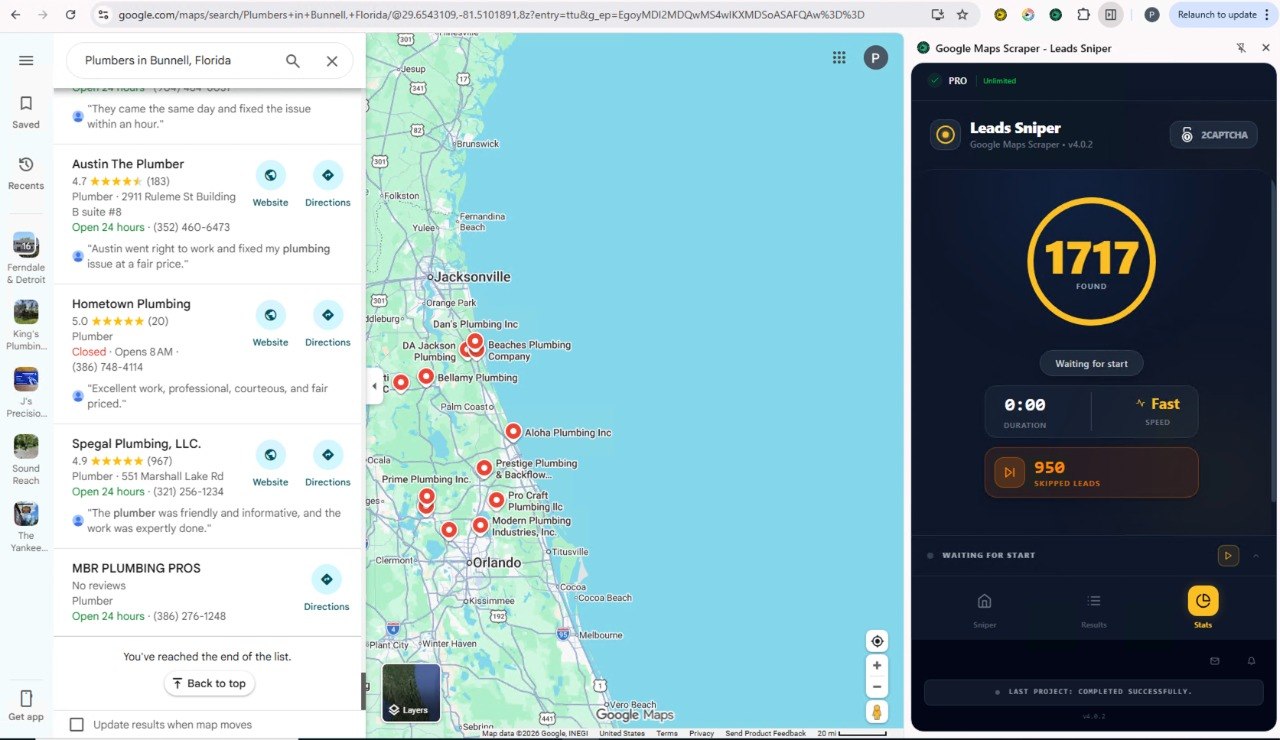
The biggest bottleneck in any outbound campaign is data quality. Without an accurate, up-to-date list of target companies and decision-makers, even the best sales copy will fail. Purchased lists quickly become outdated, delivering high bounce rates and poor response.
How to generate leads online using advanced data extraction:
- Use scraping tools to build lists from reliable, real-time sources.
- Prioritize data from official company websites, LinkedIn, and verified online directories.
Recommended Tool: Leads Sniper
Leads Sniper automates extracting essential business data from sources like Google Maps and Google Search:
- Set target parameters location, keyword, industry once, and the software generates a list of local US businesses in seconds.
- Capture critical contact details emails, phone numbers, social profiles that are verified up to the minute.
- Export clean lists to your CRM or marketing automation platform for instant outreach.
Unlike most data providers with high monthly fees, Leads Sniper’s one-time pricing means unlimited usage. Whether you’re scaling cold outreach or mapping new territories, it’s the most efficient way to fuel your prospecting machine.
Aligning Your Tech Stack: CRM Integration and Lead Scoring
After generating leads whether inbound or outbound how you manage that information is the difference between growth and chaos.
Modern CRM Integration:
- Tag every contact with lead source, industry, company size, intent, and relevant notes.
- Automate tasks: Use tools like HubSpot, Salesforce, or Zoho to schedule calls, trigger follow-up emails, and update sales stages.
- Implement automated lead scoring: Assign points for actions such as “Opened Outreach Email,” “Visited Pricing Page,” or “Downloaded Lead Magnet”.
Example:
Suppose a lead captured from Google Maps scraping responds to your cold email and clicks to view your product demo. The CRM raises their score automatically, and the lead is routed to your top sales closer with all the context attached.
Measuring Success: Analytics and Continuous Improvement
You cannot improve what you don’t track. The most effective teams:
- Set clear KPIs at each stage: landing page conversion rate, cold email reply rate, booked meeting rate, revenue per lead.
- Use funnel analytics to identify and fix leaks (e.g., lots of website visitors but few form submissions).
- Routinely A/B test subject lines, offers, and landing page elements.
How to generate leads online in 2026 means embracing a culture of experimentation and continuous optimization.
Conclusion and Next Steps
Mastering how to generate leads online in 2026 requires a hybrid approach and relentless focus on execution. To ensure lasting results, keep these takeaways in mind:
- Leverage both inbound and outbound strategies: Build trust with content, but also proactively reach out to targeted prospects using accurate, real-time data.
- Invest in high-quality data tools: Adopt advanced scraping and enrichment platforms like Leads Sniper to continuously fuel your sales pipeline with clean, verified contacts.
- Prioritize personalization and automation: Every message, offer, and follow-up should be relevant and timely automation makes this scalable, but never sacrifice the human touch.
- Integrate and optimize your tech stack: Connect your CRM, marketing automation, and analytics platforms for seamless pipeline management and informed decision-making.
- Commit to continuous testing and improvement: Use analytics to identify drops in conversion, routinely A/B test messaging, and always refine your outreach for better response.
Key Action Steps:
- Audit your current lead generation playbook identify traffic, data, or conversion bottlenecks.
- Launch a fresh inbound asset such as a downloadable trends report or interactive tool to capture new leads.
- Execute an outbound campaign using real-time data and a personalized cold outreach sequence.
- Integrate all leads into your CRM and leverage automated lead scoring for smarter, faster follow-ups.
Ready to eliminate your pipeline bottlenecks and dominate your niche? Build your custom prospect lists today and watch your meeting calendar fill up and your revenue grow.
- Balance inbound and outbound Don’t become overly dependent on one channel.
- Invest in quality data tools to enrich your lists and accelerate outreach.
- Continuously refine your messaging, offers, and tech stack for today’s digital-first buyers.
Action Steps:
Ready to eliminate your pipeline bottlenecks and dominate your niche? Build your custom prospect lists today and watch your meeting calendar fill up and your revenue grow.